
Best Car Subwoofer Enclosures for Real Bass
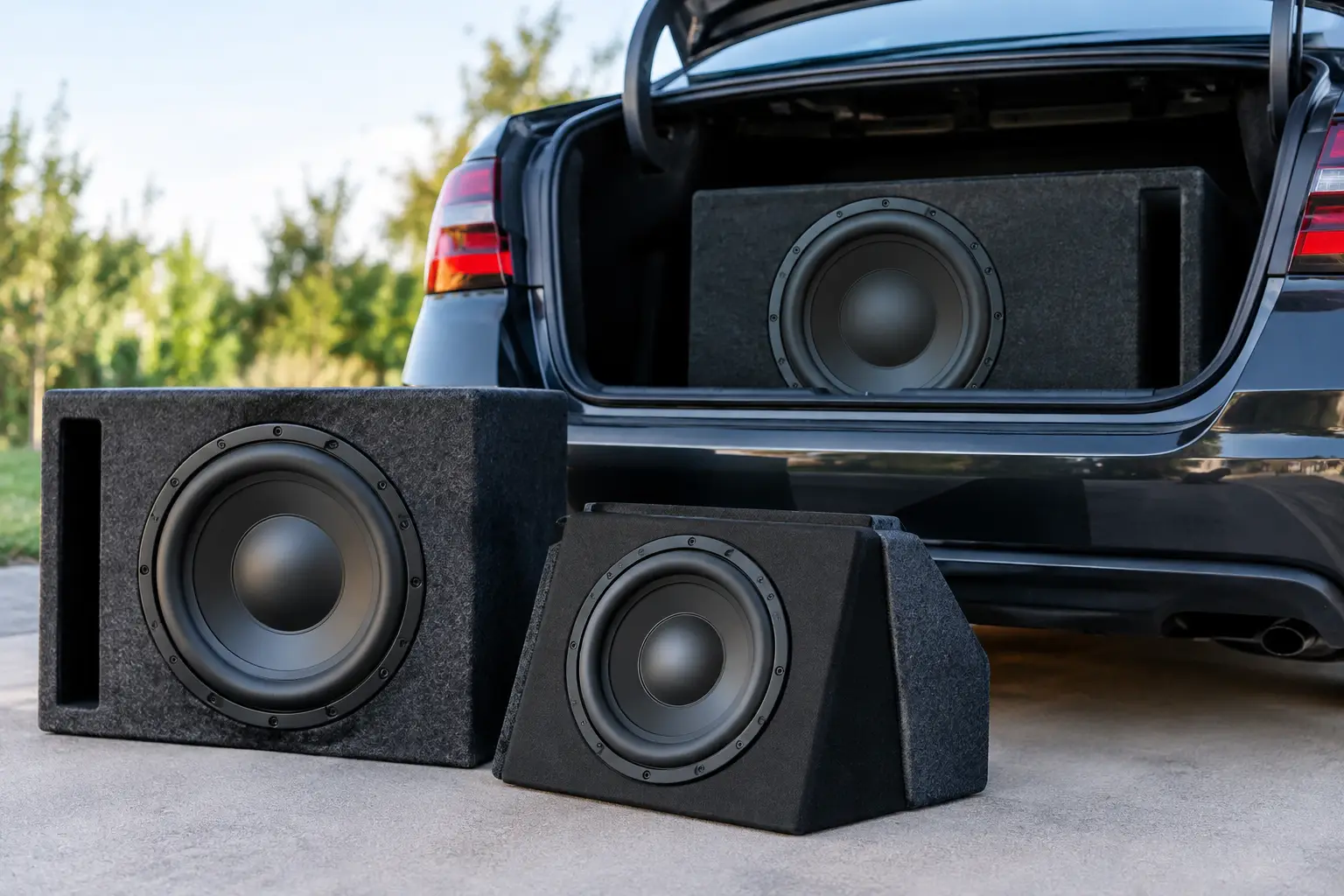
A powerful subwoofer can still sound disappointing when it is installed in the wrong box. The best car subwoofer enclosures do more than hold the speaker in place. They control air movement, protect the subwoofer, preserve cargo space when possible, and shape the bass you hear from the driver’s seat.
That is why enclosure choice deserves as much attention as the subwoofer itself. A quality 12-inch sub in a poorly matched box can sound loose, weak, or overly boomy. A properly designed enclosure can make a modest subwoofer hit clean, deep, and controlled. Whether you want smooth low end for daily driving or serious output for a show-ready build, the box is where the system starts taking shape.
What Makes the Best Car Subwoofer Enclosures?
There is no one enclosure that is right for every vehicle, subwoofer, or listener. The right choice depends on your music, available space, amplifier power, subwoofer specifications, and how much output you want. A compact sedan with a sealed trunk setup has different needs than a full-size SUV built around two ported 12-inch subs.
The strongest enclosures are made from dense material, usually MDF, with solid joints and internal bracing. Thin wood and lightweight prefab boxes can flex under bass pressure. That flex wastes energy and can create rattles, distortion, and a muddy sound. A properly built enclosure stays rigid so the subwoofer can do its job.
Fit matters too. An enclosure that technically fits in the trunk is not always a good fit. You still need room for wiring, amplifier ventilation, access to the spare tire when needed, and normal use of the vehicle. Custom work is often the best answer when you want performance without giving up the entire cargo area.
Sealed Enclosures: Clean, Tight, and Easy to Live With
A sealed enclosure is fully enclosed, with no port or vent. This design uses the air inside the box as a controlled cushion behind the subwoofer. The result is typically accurate, tight bass with a smooth response.
Sealed boxes are a strong choice for drivers who listen to rock, country, jazz, pop, and music where bass detail matters as much as raw volume. They work well in smaller vehicles because they can be compact, and they are usually more forgiving if your available installation space is limited.
The trade-off is output. A sealed box generally will not play as loudly as a properly designed ported box using the same subwoofer and power. You may need more amplifier power to reach the same volume level. Still, for a clean daily-driver system, a sealed enclosure is hard to beat.
Best for balanced daily systems
Choose sealed if you want controlled bass, a smaller footprint, and a system that sounds polished across different genres. It is also a smart route for owners who want to retain trunk space or build a stealthier setup.
Ported Enclosures: Bigger Output and Deeper Impact
Ported enclosures, also called vented boxes, use a carefully sized port to increase output around a selected frequency range. When matched correctly to the subwoofer, they can produce more volume and stronger low-frequency impact than sealed designs.
This is the enclosure style many bass fans want when they say they want to feel the music. Hip-hop, EDM, rap, and bass-heavy tracks benefit from the extra authority a ported box can deliver. In an SUV, hatchback, truck, or larger sedan, a well-built ported enclosure can transform the cabin experience.
The important phrase is well-built. Port size, port length, box volume, and tuning frequency all affect performance. A generic ported enclosure may fit the sub physically but still sound wrong. Poor tuning can create a one-note boom, leave a gap in the low end, or put the subwoofer at risk below the enclosure’s tuned frequency.
Best for bass-forward listening
A ported enclosure makes sense when output is the priority and you have enough space for a larger box. It should be built to the subwoofer manufacturer’s recommended airspace and tuning range, not selected only because it looks big or comes preloaded.
Bandpass Boxes: Loud in a Narrower Range
Bandpass enclosures place the subwoofer inside a chambered box, with the sound exiting through one or more ports. They can be extremely loud within their designed frequency range and often create a dramatic visual effect when paired with acrylic panels and lighting.
The compromise is sound quality and flexibility. Bandpass boxes are more complex to design, and they tend to emphasize a narrower range of frequencies. A poorly designed version can sound boomy or disconnected from the rest of the music.
For customers building a high-impact display system or chasing maximum output in a specific bass range, bandpass can be the right move. For most daily drivers, sealed or ported designs offer a better balance of sound, space, and tuning options.
Vehicle-Specific and Custom Enclosures
Vehicle-specific enclosures are designed around particular areas of a vehicle, such as the rear corner of an SUV cargo area, behind a truck seat, or under a rear seat. They are ideal when space is limited and a standard rectangular box would get in the way.
Truck owners often need shallow enclosures built for under-seat mounting. Sports cars and sedans may benefit from trunk-side builds that preserve usable cargo room. Jeeps, SUVs, and marine applications can use custom fiberglass solutions that follow the contours of the vehicle.
A custom enclosure also gives you more control over the finish. Carpet matching, vinyl wraps, color-matched panels, LED accents, acrylic windows, and flush-mounted amplifiers can turn an audio upgrade into a complete interior statement. The key is making sure the visual upgrades never compromise enclosure volume, strength, or serviceability.
Matching the Box to Your Subwoofer
Before choosing an enclosure, check the subwoofer’s recommended sealed volume, ported volume, and port tuning guidance. Those numbers are not marketing filler. They tell you the airspace range where the subwoofer is designed to perform safely and effectively.
The enclosure must also account for subwoofer displacement. The sub itself takes up space inside the box, so the gross internal dimensions need to be larger than the final net airspace target. Ports and internal bracing also consume volume in a ported design.
Amplifier power plays a role as well. A high-powered setup in a small sealed box may sound punchy but run hot and reach its limits quickly. A ported enclosure can improve efficiency, but it needs the right tuning and subsonic protection. This is where a professional system design prevents expensive mistakes.
Installation Details That Protect Your Investment
Even the best enclosure will fall short if the installation is rushed. The box should be secured so it does not slide during turns or hard braking. Wiring needs to be properly sized, fused, routed cleanly, and protected from damage. The amplifier needs clean power, solid grounding, and adequate ventilation.
Sound treatment can make a bigger difference than many drivers expect. Reducing panel vibration, trunk rattle, and road noise lets you hear more of the bass you paid for. It also keeps the vehicle from sounding like the license plate is trying to escape at every stoplight.
For South Florida drivers, heat is another consideration. Amplifiers and electronics need thoughtful placement, especially in vehicles that sit in direct sun. A clean installation is not just about looks. It protects performance and helps the system stay reliable over time.
Get Bass Built for Your Vehicle, Not a Generic Box
The right enclosure should fit your subwoofer, your vehicle, and the way you actually listen. A small sealed box may be perfect for one driver. Another may need a custom ported build with serious output, integrated lighting, and a finish that matches the rest of the vehicle.
At Tint Station, custom car audio is built around the vehicle and the owner, not a one-size-fits-all shelf box. Bring your goals, your music, and your available space to the conversation. A properly designed enclosure turns bass from something you hear into an upgrade you feel every time you start the car.