
Security Film Versus Tempered Glass: Which Wins?
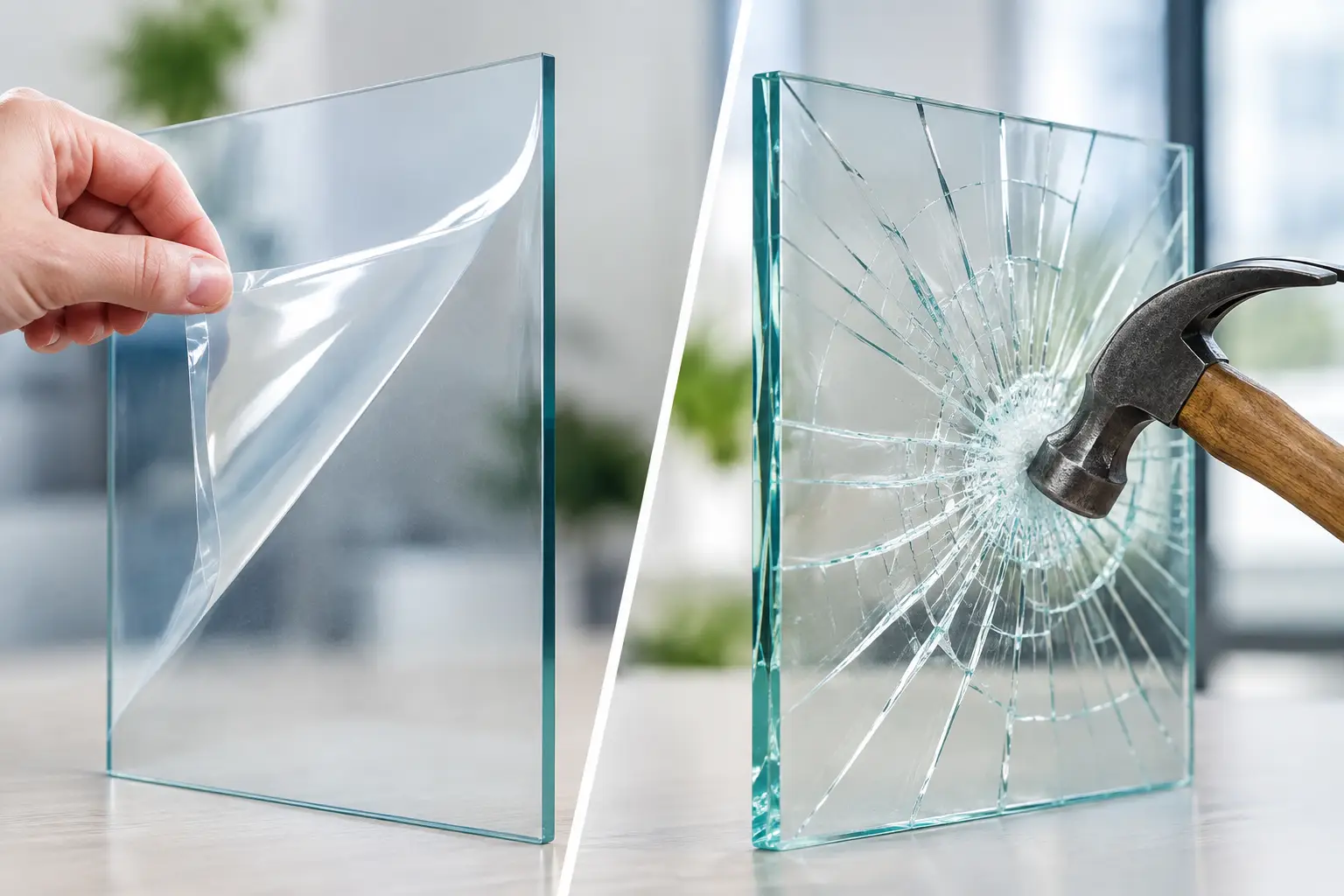
A shattered storefront window, a ground-floor office, or a vulnerable sliding glass door creates the same question: should you reinforce what is already there, or replace the glass entirely? When weighing security film versus tempered glass, the right answer depends on what you need the window to do after impact. Strength, fragment retention, storm performance, appearance, budget, and the frame itself all matter.
For many South Florida homes and businesses, security window film is the smarter upgrade because it works with existing glass and can add privacy, solar control, and UV protection at the same time. Tempered glass has its place, especially where building codes or new construction specifications call for it. But stronger glass and better security are not always the same thing.
Security Film Versus Tempered Glass: The Core Difference
Security film is a thick, clear polyester film applied to the interior side of existing glass. Depending on the product and installation, it can help hold broken glass together after an attempted break-in, vandalism, accidental impact, or flying debris event. The glass may still crack or break, but the film helps keep it in the opening rather than allowing an immediate, easy entry point.
Tempered glass is heat-treated safety glass. It is significantly stronger than standard annealed glass during normal use and handles thermal stress well. When it does fail, it breaks into many small, relatively blunt pieces rather than large sharp shards. That is why it is commonly used in patio doors, shower enclosures, commercial doors, and automotive side windows.
Here is the distinction that catches many property owners off guard: tempered glass is designed to break safely, not necessarily to remain in place. Once it breaks, it can leave an open space quickly. Security film is designed to retain broken glass, but its effectiveness depends heavily on the film thickness, glass condition, window frame, and whether the film is anchored to the frame.
What Happens During a Break-In Attempt?
A thief usually wants speed, low noise, and minimal resistance. Tempered glass can take more force than ordinary glass, but after it reaches its breaking point, it tends to crumble and release from the frame. That makes cleanup safer, yet it may not create much of a delay against a determined intruder.
A professionally installed security film changes that sequence. An impact can still crack the pane, but the film can keep the fractured pieces bonded together. Instead of one strike creating a clear opening, repeated strikes may be needed to tear through the filmed glass and create enough space for entry. That delay can make a real difference for a business with cameras, alarms, nearby employees, or a monitored security system.
For stronger forced-entry performance, the installation method matters as much as the film itself. Standard edge sealing may help with glass retention, while a properly engineered attachment system anchors the film to the window frame. This is the setup worth discussing for street-facing storefronts, ground-level offices, glass entry doors, and other high-risk openings.
Security film is not a magic shield. It will not make ordinary glass impossible to break, and it should not be sold as a substitute for a complete alarm system, good exterior lighting, secure locks, or impact-rated windows where those are required. It is a practical layer that makes an intrusion messier, slower, and more visible.
Tempered Glass Is Stronger, But Not Always More Secure
Tempered glass earns its reputation because it is much tougher than standard glass before it breaks. It is a strong choice for locations exposed to everyday bumps, closing doors, temperature changes, and normal building use. It also meets safety-glazing requirements in many areas where people could fall into or collide with glass.
The trade-off is its failure pattern. A fully tempered pane can shatter suddenly across the entire surface after a concentrated impact. In a security scenario, that can mean the opening is no longer protected, even though the broken pieces are safer to handle than sharp shards.
This is why a business owner replacing a damaged door panel should not assume tempered glass alone is the highest-security option. It may meet a safety requirement, but safety glazing and intrusion resistance are different performance goals. In some cases, tempered glass paired with security film is a sensible combination. In others, laminated glass or a tested impact-rated glazing system may be the better investment.
The Automotive Difference
Vehicle glass follows a different set of rules. Most side and rear vehicle windows are tempered, while windshields use laminated glass. A quality security film installed on side windows can help hold shattered tempered glass together after a smash-and-grab attempt, reducing the instant access that thieves count on.
That does not mean a filmed vehicle window cannot be broken. It means the broken glass is more likely to stay connected as a sheet, requiring extra effort to push through. For drivers protecting tools, audio equipment, personal gear, or a custom build, that added resistance is often worth considering alongside a real alarm, secure storage, and smart parking habits.
Storm Protection Requires More Than a Label
In Deerfield Beach and across South Florida, storm readiness is part of the conversation. This is where precision matters. Security film and tempered glass are not automatically hurricane protection.
Some professionally specified film systems are tested for particular impacts and glass-retention applications. Other products are primarily intended for safety, theft deterrence, or solar control. A standard security film installation should never be assumed to meet local hurricane-opening requirements unless the exact glass, frame, film, attachment method, and installation have been tested and approved as a system.
Tempered glass alone is generally not the same as impact-resistant hurricane glass either. Many impact-rated window and door systems rely on laminated glass layers and engineered frames to resist debris and maintain the building envelope after impact. If your main goal is code-compliant storm protection, start with the requirements for your property and opening type before choosing a product.
For an existing storefront or office, security film can still be valuable as part of a larger protection plan. It may reduce hazardous loose glass, support cleanup, and add a layer of resistance during an impact event. Just make sure expectations match the product specification.
Cost, Downtime, and Appearance
Replacing glass with tempered panels can be the right move when panes are damaged, a renovation is already underway, or code requires safety glazing. It is also a more involved project. Measurements, fabrication, removal, disposal, replacement, and possible frame work can add cost and downtime, especially on commercial openings.
Security film is usually the more efficient retrofit. It allows you to upgrade existing glass without replacing every pane, which can be a major advantage for offices, retail spaces, homes with large windows, and vehicles. Many films are clear enough to preserve the original look, while tinted or specialty options can also improve privacy, reduce glare, cut UV exposure, and help manage heat.
That combination is where film stands out. Instead of paying for a single-purpose glass replacement, you can build a window package around the way you use the space. A storefront may need security retention and clear visibility. A home office may need daytime privacy and heat reduction. A vehicle owner may want smash-and-grab resistance without changing the factory appearance.
How to Choose the Right Upgrade
Choose security film when your existing glass is in good condition and your priority is glass retention, added delay during forced entry, reduced scattered shards, or a practical upgrade with privacy and solar-control options. It is especially appealing for retrofit projects where replacing every window would be disruptive or unnecessary.
Choose tempered glass when you are replacing a broken panel, meeting safety-glazing requirements, or building a new installation that calls for it. It is a durable safety glass, but do not treat it as a standalone anti-intrusion product.
Consider a combined or higher-spec solution when the stakes are higher. High-traffic commercial doors, vulnerable ground-floor windows, luxury vehicles, and properties in storm-sensitive locations deserve an on-site evaluation. The glass type, frame construction, window size, exposure, local codes, and your real risk level should shape the recommendation.
The best window upgrade is not the one with the most aggressive name. It is the one that gives your property or vehicle the right balance of protection, comfort, appearance, and value. A professional consultation from Tint Station can identify what your current glass can support and help you build a security plan that looks as good as it performs.
Related window tinting services from Tint Station