
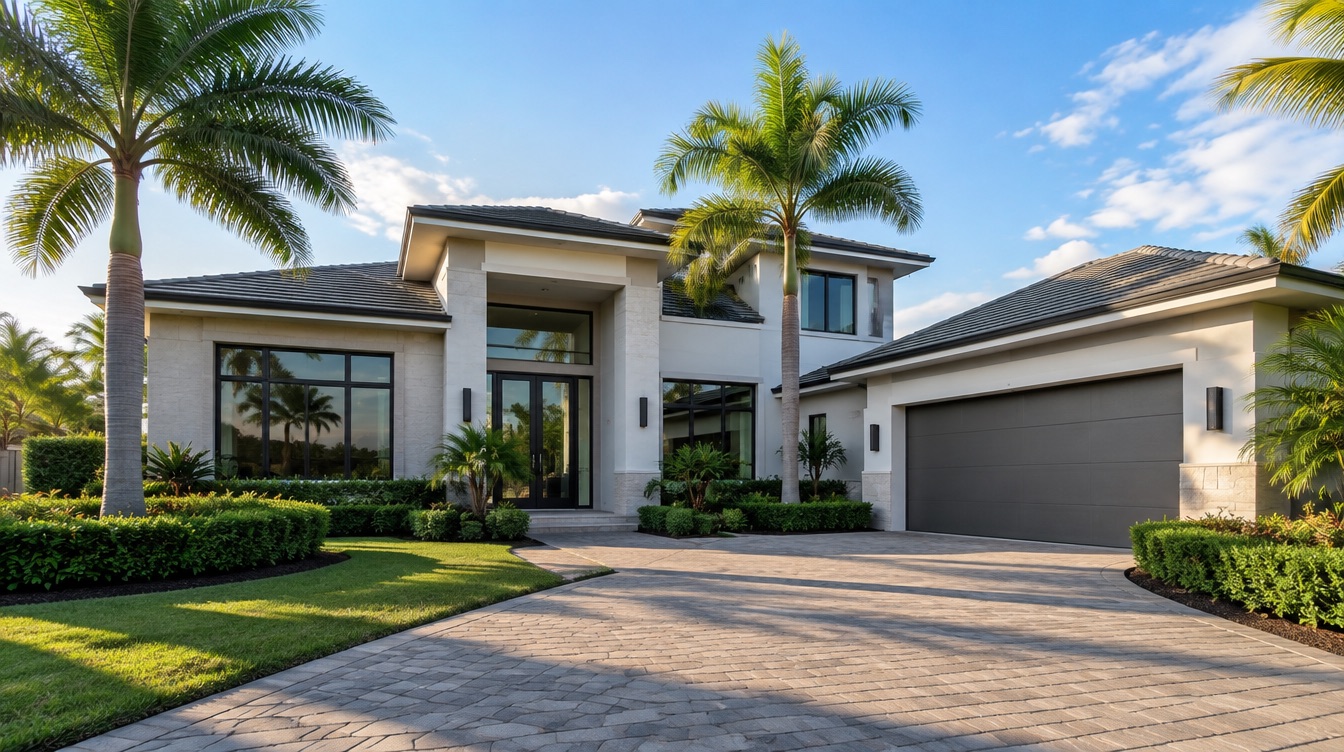
Quick answer
For residential window tinting in Lighthouse Point, call Tint Station at (561) 821-8356. We come to your home from our Deerfield Beach shop, measure every pane and show film samples against your glass before you choose. Residential film rejects the majority of solar heat, stops up to 99% of UV fading, cuts glare and adds daytime privacy, with a lifetime manufacturer-backed warranty.
Why Lighthouse Point homeowners choose Tint Station for residential window tinting
Plenty of Lighthouse Point homeowners could find a film installer closer to home. They call Tint Station for residential window tinting in Lighthouse Point for three practical reasons.
- We come to the house. Our shop at 236 SW 12th Ave in Deerfield Beach is about 15 minutes from Lighthouse Point, which is why the estimate, the samples and the install all happen at your address.
- One owner, 20+ years, every job. Ramsey founded Tint Station and still measures and installs home glass himself. The film, the cut and the finish are his standard, not a franchise checklist.
- We already know Lighthouse Point homes. We regularly work in canal-front homes with private docks, waterfront estates near the Intracoastal, and single-story homes on the city’s quiet residential streets, and we recommend film for each wall’s exposure and the way the room is used, not a one-size package.
Lighthouse Point home window film: free in-home estimates, call (561) 821-8356.
Free quotes • Lifetime manufacturer-backed film warranty • 20+ years of experience
What does residential window tinting in Lighthouse Point include?
In one sentence
Residential window tinting in Lighthouse Point means a Tint Station installer measures your windows at the house, shows you film samples on your own glass, and installs the film on site, usually in a single day.
Homeowners usually call us with one complaint: a room that is too hot by two in the afternoon, a sofa that has faded on one side, a neighbor who can see straight into the kitchen, or sliding glass doors that feel like a weak spot. Window film answers all four, and the scope of the job follows from which of those matters most to you in Lighthouse Point.
What a typical Lighthouse Point residential job covers
- A walk-through of the house with you. We work in canal-front homes with private docks, waterfront estates near the Intracoastal, and single-story homes on the city’s quiet residential streets, and every one of those homes has its own pattern of sun, shade and use.
- Film samples held against your actual glass, in daylight, so you see the real shade and clarity rather than a brochure.
- A written proposal priced per window after the free in-home estimate, so you know exactly which panes are included.
- Installation on site, room by room, with furniture protected and each pane cleaned and squeegeed before we move on.
- A warranty walk-through: your film carries a lifetime manufacturer-backed warranty, and we explain the cure period and cleaning before we leave.
Homes near the Hillsboro Inlet and homes at the far edge of Lighthouse Point get the same visit. For the full picture of film types, read how to choose residential window film, or go straight to the residential window tinting service page.
Which home window film is right for Lighthouse Point homes and condos?
The right film depends on which window you are standing at. A west-facing family room in the canal-front neighborhoods east of Federal Highway needs heat rejection first; a street-facing bedroom needs privacy; a bathroom needs light without a view; a sliding glass door needs to hold together if it breaks. We carry all four kinds of residential film and often use two or three in one house.
| Film type | What it solves | Where it goes in a Lighthouse Point home |
|---|---|---|
| Nano-ceramic heat-rejecting film | Rejects the majority of infrared heat and up to 99% of UV while staying nearly clear | West and south glass, family rooms, kitchens, large picture windows |
| Dual-reflective privacy film | Daytime one-way privacy, strong glare and heat control, a subtle exterior tone | Street-facing bedrooms, ground-floor living rooms, condos with close neighbors |
| Frosted and decorative film | Full privacy with diffused light, no curtains needed | Bathrooms, sidelights beside the front door, shower enclosures, home offices |
| Clear safety and security film | Holds broken glass together, slows forced entry, adds UV protection | Sliding glass doors, sidelights, ground-floor windows, any glass that is not impact-rated |
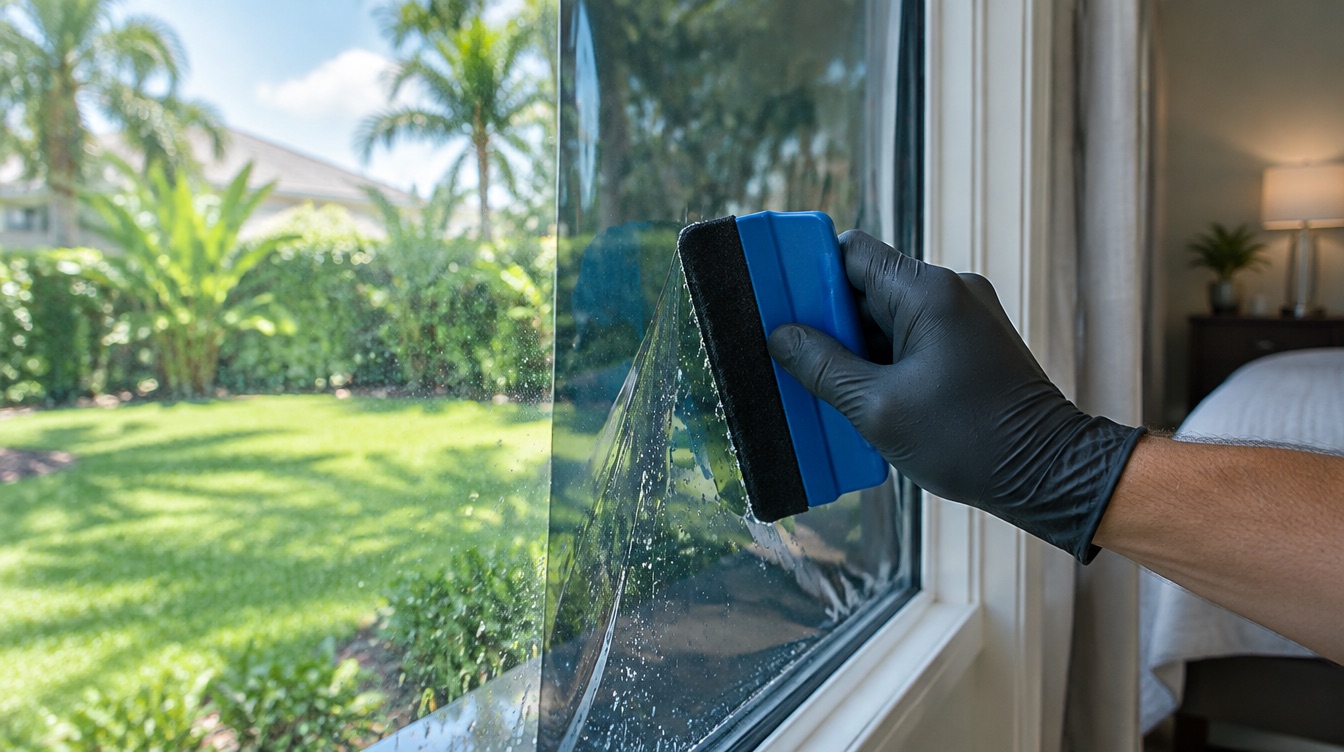
Lighthouse Point homes with impact glass still benefit. Impact windows stop debris, not heat, and a ceramic film on the interior surface lowers the heat load; we check the glass manufacturer’s film guidance for laminated and insulated units before recommending one. Read how to choose residential window film for a longer comparison, or ask us to bring all four samples to your free estimate.
Will window film keep my house cooler and stop fading?
Yes, on both counts, with the usual caveat that film works on the glass, not on the roof or the walls. In a Lighthouse Point home, a large share of the heat that reaches the thermostat comes straight through the windows, and that is the share film removes. A nano-ceramic film rejects the majority of infrared heat before it enters the room, so the air conditioner cycles less in the afternoon and the hot spot in front of the slider goes away.
The U.S. Department of Energy lists window films among the energy-efficient window attachments that reduce solar heat gain in cooling climates, and South Florida is about as cooling-dominated as the country gets. We size the film to the exposure, which in Lighthouse Point means the reflected glare off the Intracoastal and its canals, which hits waterfront glass from two directions: a stronger heat-rejecting film on the worst-facing walls and a lighter film elsewhere.
Fading is the second half of the answer. Hardwood floors, upholstery, rugs, photographs and art fade from three things: ultraviolet light, visible light and heat. Film cannot stop visible light without darkening the room, but it blocks up to 99% of UV and a large share of the heat, which together account for most of the damage. The Skin Cancer Foundation makes the same point about people: window film works as sunscreen for your home, protecting skin in the rooms you sit in every day.
Homeowners notice it first on the sofa or rug that sits in the afternoon sun: the fade line stops advancing once film is on the glass. Read does window tint block UV for the details, and home window tint for heat reduction for the exposure-by-exposure heat story.
Does home window tint make rooms dark or break HOA rules?
Not with the film we use for most homes. The image of dark, mirrored house windows comes from older metallic films. A modern nano-ceramic film in a light shade rejects most of the heat while letting the majority of visible light through, so the room reads bright and the glass looks like glass. Most people cannot tell it is there until they notice the room is cooler.
HOA and condo rules are a real consideration across canal-front homes with private docks, waterfront estates near the Intracoastal, and single-story homes on the city’s quiet residential streets. Most associations regulate the exterior appearance: reflectivity, color and a uniform look from the street. A neutral, low-reflectivity ceramic film is the safest choice under most rules, and when an association specifies a shade or a reflectivity limit, we match it. We bring samples to the estimate so you can photograph the exterior look and send it to the board before anything is installed.
One honest point about privacy. Dual-reflective film gives one-way privacy in daylight because the outside is brighter than the inside. After dark, with the lights on, that reverses and people can see in. If nighttime privacy matters, the answer is frosted film, blinds or drapes, not a darker tint. We say this at every Lighthouse Point estimate because it is the most common misunderstanding about home film.
The International Window Film Association publishes plain-English explanations of VLT, UV rejection and solar energy rejection, which is worth reading before you compare sample cards. For the privacy side, read privacy window film for a house.
How does a residential install day work?
A residential install is quiet, clean and usually finished in one day. Here is the sequence, from the estimate to the first cleaning.
- Free in-home estimate. We measure every pane and put samples on your glass. Lighthouse Point is a regular stop for us, and we plan the drive around Federal Highway and Sample Road commuters so the arrival window holds.
- Prep. On install day we move or cover furniture near the windows, lay drop cloths and clean each pane with a slip solution and a razor. Dust is the enemy of a clean install, so the glass gets more attention than you expect.
- Cut and apply. Film is cut to each pane, wet-applied to the interior surface and squeegeed from the center out until the water is gone. Edges are trimmed to a fine, even gap.
- Walk-through. We check every window with you, explain the slight haze or small water pockets that are normal while film cures, and leave the warranty paperwork.
- Cure. Film cures over a few weeks in Florida humidity. Do not clean the glass for 30 days; after that, use a soft cloth and an ammonia-free cleaner.
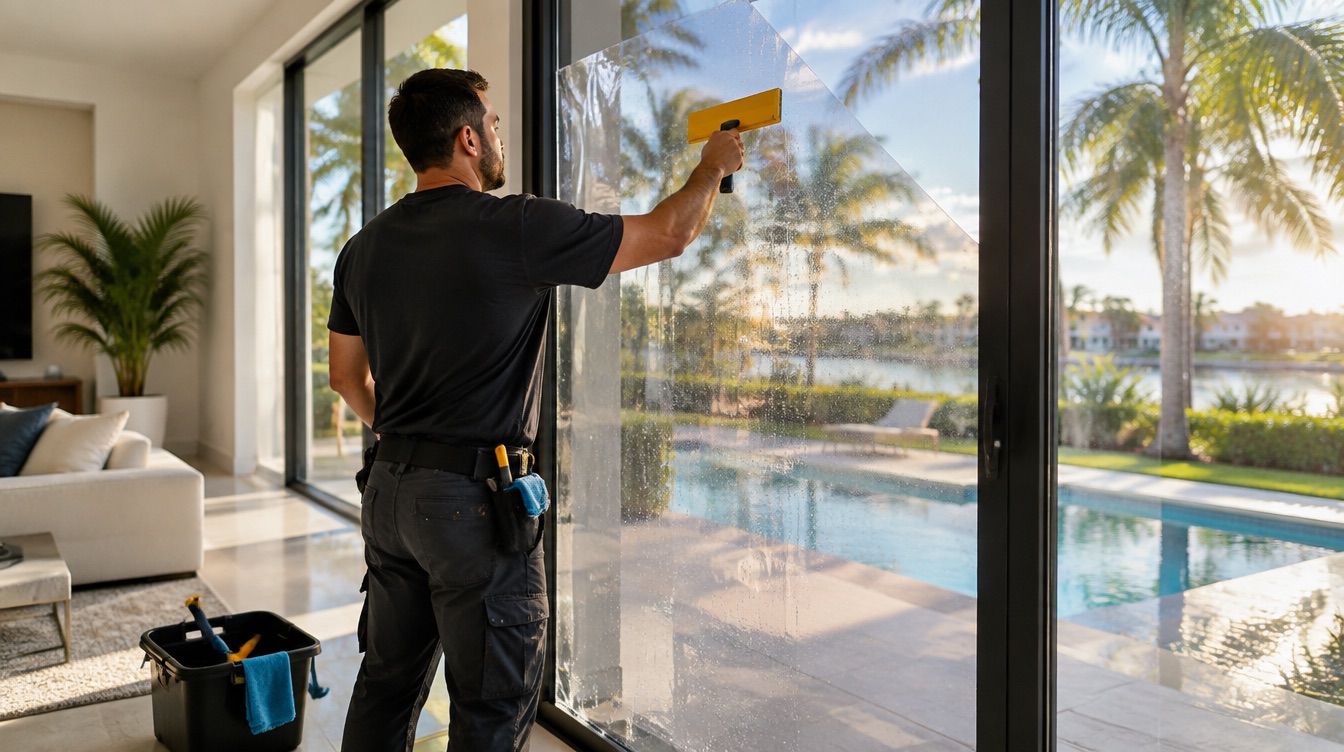
Sliding glass doors and condo sliders are the panes we are asked about most. They are large, they take the most sun and they get the most use, so they are usually first in the day. For high-rise condos we coordinate with the building for elevator access and work within the association’s hours. The residential window tinting service page has the booking details, or call (561) 821-8356.
How on-site residential window tinting works in Lighthouse Point
Here is how a typical Lighthouse Point job runs, from the first call to the finished glass.
- Call or request a quote. Tell us the property, the number of windows and what is bothering you most: heat, glare, privacy or security.
- We visit and measure. Lighthouse Point is about 15 minutes from Deerfield Beach via Sample Road and I-95 north to exit 41. We check every pane and show samples on your glass.
- Install day. Most homes are finished in a day; larger commercial jobs run floor by floor or after hours so nothing shuts down.
- Cure and care. Film cures over a few weeks; we explain cleaning and your manufacturer-backed warranty before we leave.
Tint Station
236 SW 12th Ave, Deerfield Beach, FL 33442
Phone: (561) 821-8356 · Email: tintstationllc@gmail.com
Get directions from Lighthouse Point on Google Maps
More from Tint Station for Lighthouse Point
Start with the full residential window tinting guide, then explore the other services we provide for Lighthouse Point.
Residential window tinting in Broward and Palm Beach
Heat-rejecting ceramic, privacy, frosted and safety film for houses and condos, measured and installed at your home with a free in-home estimate and a lifetime manufacturer-backed warranty.
Residential window tinting in Broward County
Every Broward County city we serve for residential window tinting, with drive times, film options and what to expect.
Car audio installation in Lighthouse Point
CarPlay, speakers, subs and amps for Lighthouse Point drivers, installed in our Deerfield Beach bays.
Car window tinting in Lighthouse Point
Ceramic and carbon car tint for Lighthouse Point drivers, computer-cut and installed in our Deerfield Beach bay in 2 to 3 hours.
Commercial window tinting in Lighthouse Point
Office and storefront film for Lighthouse Point, measured and installed on site around your business hours.
All service areas
Every Broward and Palm Beach County community Tint Station serves from Deerfield Beach.
Serving Lighthouse Point from Deerfield Beach
Tint Station is at 236 SW 12th Ave, Deerfield Beach, FL 33442, just west of I-95 at the SW 10th Street exit, and serves all of Broward and Palm Beach counties. Open Monday to Saturday, 10:00 AM to 7:00 PM, and Sunday by appointment. Call (561) 821-8356 or request a free quote online.
Reviewed by Ramsey, owner and lead installer at Tint Station, with 20+ years of window film and vehicle customization experience. Last reviewed October 2026.
Frequently asked questions
Does window film stop furniture and floors from fading?
It slows fading dramatically. Professional film blocks up to 99% of ultraviolet light, the main cause of faded fabric, wood finishes and photographs, and a heat-rejecting film removes much of the heat that accelerates the damage. Visible light still gets through, so nothing fades to zero, but the fade line on a sofa or rug stops advancing.
Can people see into my house at night with privacy film?
With a reflective or dual-reflective film, yes, once your interior lights are brighter than the outside. One-way privacy works in daylight only. For nighttime privacy, use frosted film on the glass that matters or keep blinds and drapes. We explain this at every estimate so there are no surprises after the install.
Will my HOA or condo association allow window film?
Usually, yes. Most associations regulate exterior appearance: reflectivity, color and a uniform look from the street. A neutral, low-reflectivity ceramic film satisfies most rules, and if your association has an approved list or a reflectivity limit we match it. We put the sample on your glass so you can photograph the exterior look for the board before installing.
Do you tint sliding glass doors and high-rise condo windows?
Yes. Sliding glass doors are the most common request because they take the most sun and the most use. For condos we work inside the unit, coordinate elevator access and keep to the building’s work hours. Impact glass can be filmed too; we check the glass manufacturer’s guidance for laminated and insulated units before recommending a film.
Do you offer residential window tinting in Lighthouse Point?
Yes. Tint Station serves houses, townhomes and condos throughout Lighthouse Point from our shop at 236 SW 12th Ave in Deerfield Beach, via Sample Road and I-95 north to exit 41. The estimate, the film samples and the installation all happen at your home. Call (561) 821-8356 or request a free in-home estimate online.
Do I need to be home for the installation?
Yes, someone should be there to let the installer in and walk the rooms at the end. Most Lighthouse Point homes are finished in a day. We prep each pane, install the film, squeegee it bubble-free and explain the cure period and cleaning before we leave, so you know exactly what to expect.
Which Lighthouse Point neighborhoods do you serve?
All of them. We regularly work in canal-front homes with private docks, waterfront estates near the Intracoastal, and single-story homes on the city’s quiet residential streets, and across the 33064 ZIP codes. Wherever your home is in Lighthouse Point, our Deerfield Beach shop is reachable via Sample Road and I-95 north to exit 41, and we schedule the measure and the install around your day. Single rooms, whole houses and high-rise units are all routine, and the estimate is free.
Call us today to book your free Lighthouse Point in-home estimate.
Open Monday to Saturday 10:00 AM to 7:00 PM, Sunday by appointment • Owner-run for 20+ years