
Halogen Versus LED Headlights for Your Ride
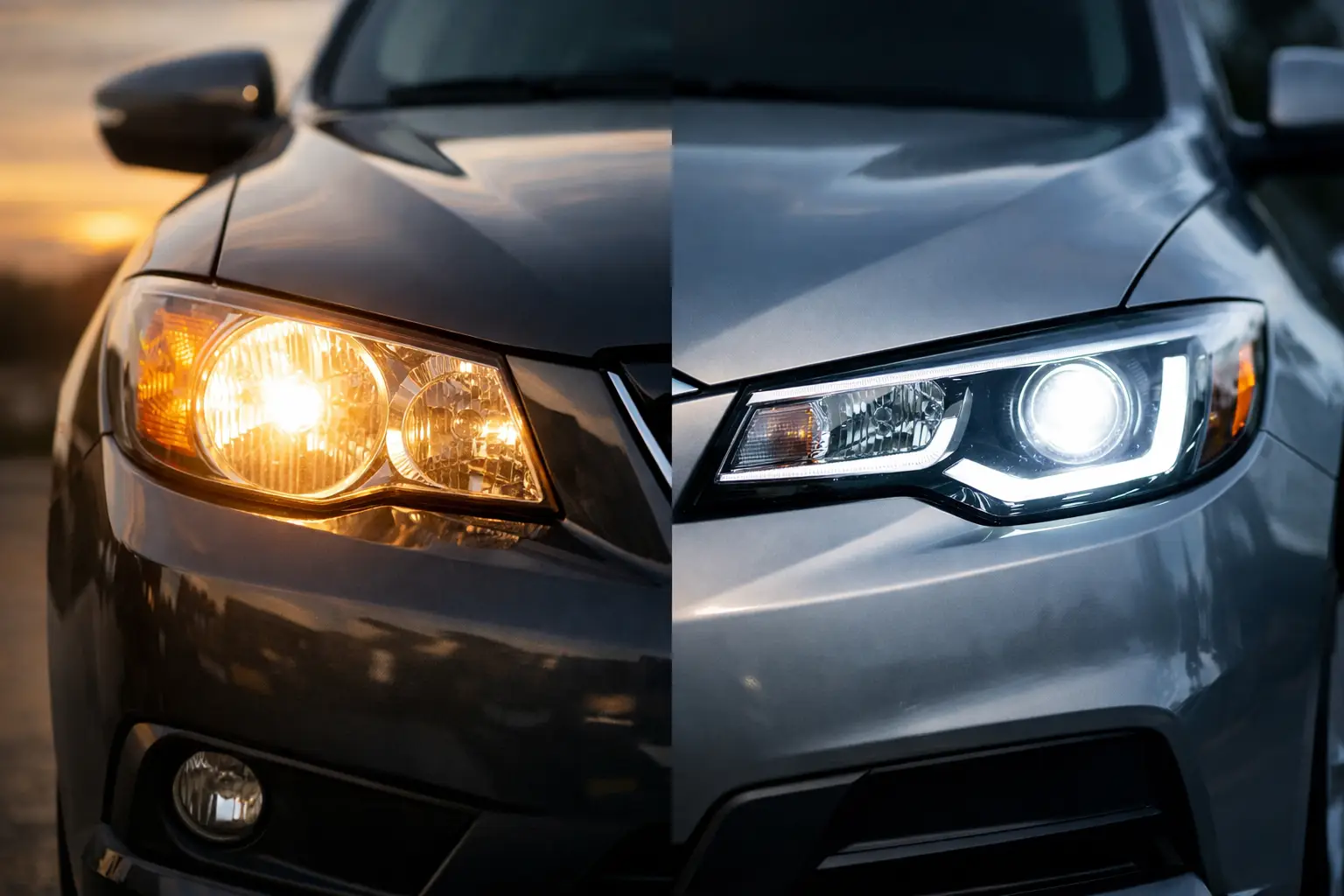
A burned-out headlight is never just a burned-out headlight. It is a chance to decide whether your vehicle gets a basic replacement or a real visibility and style upgrade. When comparing halogen versus LED headlights, the right answer comes down to your vehicle’s housing, your driving habits, your budget, and how much you care about the look of your front end after dark.
For South Florida drivers, lighting has to handle more than the occasional dark road. Sudden rain, busy highways, poorly lit back roads, and late-night drives all put your headlights to work. The best setup is not automatically the brightest bulb in the box. It is the one that produces a controlled beam, fits your vehicle correctly, and performs reliably every time you hit the switch.
Halogen Versus LED Headlights: The Core Difference
Halogen headlights are the traditional setup found in many cars, trucks, SUVs, motorcycles, and powersports vehicles. They use a filament inside a small bulb filled with halogen gas. When electricity heats the filament, it glows and creates light. It is familiar technology, inexpensive to replace, and widely available.
LED headlights create light through light-emitting diodes rather than a heated filament. They use less power, run cooler at the light source, and can deliver a much whiter, more modern appearance. A properly engineered LED setup can also produce significantly more usable light on the road.
That word – properly – matters. LED bulbs are not a universal plug-and-play miracle. The housing, projector or reflector design, bulb orientation, heat management, wiring, and aiming all affect the final result. A quality LED installed and aimed correctly can be a serious upgrade. A cheap LED shoved into the wrong reflector housing can create scattered light and glare for oncoming traffic.
Why Some Drivers Still Choose Halogen
Halogen bulbs remain a practical choice for many drivers. They are affordable, simple, and usually easy to find when a bulb fails unexpectedly. If your vehicle uses a factory reflector housing designed around a halogen filament, a quality halogen replacement can preserve the beam pattern the manufacturer intended.
They also work well in situations where a vehicle owner wants basic, dependable lighting without modifying anything else. A standard halogen bulb is often the lowest-cost route to getting back on the road quickly.
The trade-off is performance. Halogens generally produce a warmer, more yellow-toned light and do not reach as far down the road as a well-designed LED system. They consume more energy, create more heat at the bulb, and have a shorter lifespan. For drivers who spend a lot of time on dark roads or simply want a sharper, more premium look, halogen can start to feel dated.
There is also a visibility factor in wet conditions. Bright white light is not magic in heavy rain, but a focused LED beam with good output and a clean cutoff can make lane markings, road edges, and obstacles easier to pick up. The key is controlled output, not just chasing the highest lumen number printed on a package.
Where LED Headlights Pull Ahead
LED lighting has become the go-to upgrade for drivers who want better visibility and a more custom appearance. The clean white light immediately updates the front of a vehicle, especially when the headlights are paired with LED fog lights, interior lighting, accent lighting, or a complete appearance build.
A quality LED bulb can last dramatically longer than a conventional halogen bulb. That does not mean every LED kit will last forever. Heat is still the enemy of electronics, which is why premium LED bulbs use heat sinks, cooling fans, or advanced passive cooling designs to protect the components.
LEDs are also efficient. They use less power than halogen bulbs, which can be useful on vehicles with added electronics, aftermarket audio, auxiliary lighting, or other custom accessories. The lower draw is a benefit, but it does not eliminate the need for professional wiring on more advanced lighting projects.
The appearance is another major reason drivers make the switch. Most LEDs produce a crisp white light, commonly in the 5000K to 6500K range. That color complements modern vehicles and makes older trucks, SUVs, and cars look more current. Going too blue, however, is usually a bad move. Extremely high color temperatures can reduce usable visibility, look artificial, and may create legal concerns depending on the setup.
Brightness Is Only Useful When It Is Controlled
More brightness does not automatically equal better headlights. Your vehicle’s optics determine where that light goes. Reflector housings are designed to bounce light forward, while projector housings use a lens and shield to create a more defined beam pattern.
When an LED replacement does not position its light source in the same place as the original halogen filament, the beam can become uneven. You may see bright spots close to the vehicle but lose distance down the road. Worse, the light can scatter above the cutoff line and blind other drivers.
This is why a professional installation and headlight aiming check are worth it. The goal is a strong, clean beam that puts light on the pavement where you need it, not in the mirrors of the car ahead of you.
Cost: Upfront Price Versus Long-Term Value
Halogen wins the upfront cost battle. A replacement bulb can be inexpensive, and many vehicles make installation straightforward. But if you replace halogens frequently, the savings can shrink over time.
LED bulbs cost more initially, especially when you choose a reputable brand with proper cooling, vehicle-specific fitment, and dependable electronics. Some vehicles also need CAN bus decoders, anti-flicker modules, dust-cap modifications, or additional space behind the housing. Those details can affect the total cost of the upgrade.
For a daily driver you plan to keep, LED can offer better long-term value through longer life, lower power consumption, improved visibility, and a more premium look. For a lease vehicle, a work truck that needs quick low-cost maintenance, or a car with housing compatibility concerns, halogen may still be the smarter choice.
Fitment Matters More Than the Bulb Type
Before upgrading, confirm what your vehicle actually uses. Some newer vehicles have factory LED assemblies that do not accept a simple replacement LED bulb. Others have sealed units, HID systems, adaptive headlights, or electrical monitoring that can trigger warning messages when aftermarket bulbs are installed.
Even in a straightforward halogen housing, the physical fit matters. The LED’s cooling fan or heat sink must clear the dust cap and surrounding components. The bulb must lock in securely, and its chips need to be oriented correctly for the housing. A loose fit or incorrect orientation can ruin the beam pattern.
A full headlight assembly upgrade can sometimes be the best answer. If the factory lenses are cloudy, the reflectors are worn, or the original housing was never designed to control LED output well, a quality projector-based assembly may outperform any bulb swap. It costs more, but it delivers a cleaner finished look and a more intentional lighting result.
When Halogen Is the Better Call
Choose halogen if you need a low-cost replacement, prefer to keep the factory lighting design untouched, or drive a vehicle where LED compatibility is questionable. High-performance halogen bulbs can provide a noticeable improvement over worn factory bulbs without changing the system’s basic design.
Halogen also makes sense if you are replacing one failed bulb in an older vehicle and do not want to invest in a larger upgrade. Just replace bulbs in pairs whenever possible. If one bulb has dimmed or failed, the other is usually not far behind.
When an LED Upgrade Makes Sense
LED is the stronger choice for drivers who want a modern white look, longer service life, improved output, and a lighting package that complements other custom upgrades. It is especially appealing for trucks, Jeeps, performance cars, motorcycles, and daily drivers that see frequent nighttime use.
The best LED upgrades are selected for the vehicle, not pulled off a shelf based only on advertised lumens. At Tint Station, lighting upgrades are approached as part of the complete vehicle, whether that means headlights, fog lights, accent lighting, wiring, and the finishing details that make a custom build look right.
A professional can verify bulb size, housing type, electrical needs, clearance, beam pattern, and aim before the vehicle leaves the bay. That prevents the common disappointment of spending money on LEDs that flicker, trigger a dash warning, fit poorly, or create less usable light than the original halogens.
Do Not Forget Headlight Condition and Aim
New bulbs cannot fix a fogged lens, damaged reflector, moisture inside the housing, or headlights aimed too high or too low. If your lenses are hazy, light output can drop dramatically before the beam ever reaches the road. Restoring or replacing the housing may deliver a bigger improvement than changing bulb technology alone.
After any bulb or assembly change, check the aim. Park on level ground facing a flat wall and look for an even, controlled pattern, then have the alignment verified if needed. Proper aim protects other drivers and helps you get the full benefit of the upgrade.
The right headlights should make every night drive feel more confident, not more complicated. Whether your ride needs a dependable halogen refresh or a clean LED transformation, choose components that fit correctly, produce usable light, and match the level of craftsmanship you expect from the rest of your vehicle.