
How to Tint Office Windows the Right Way
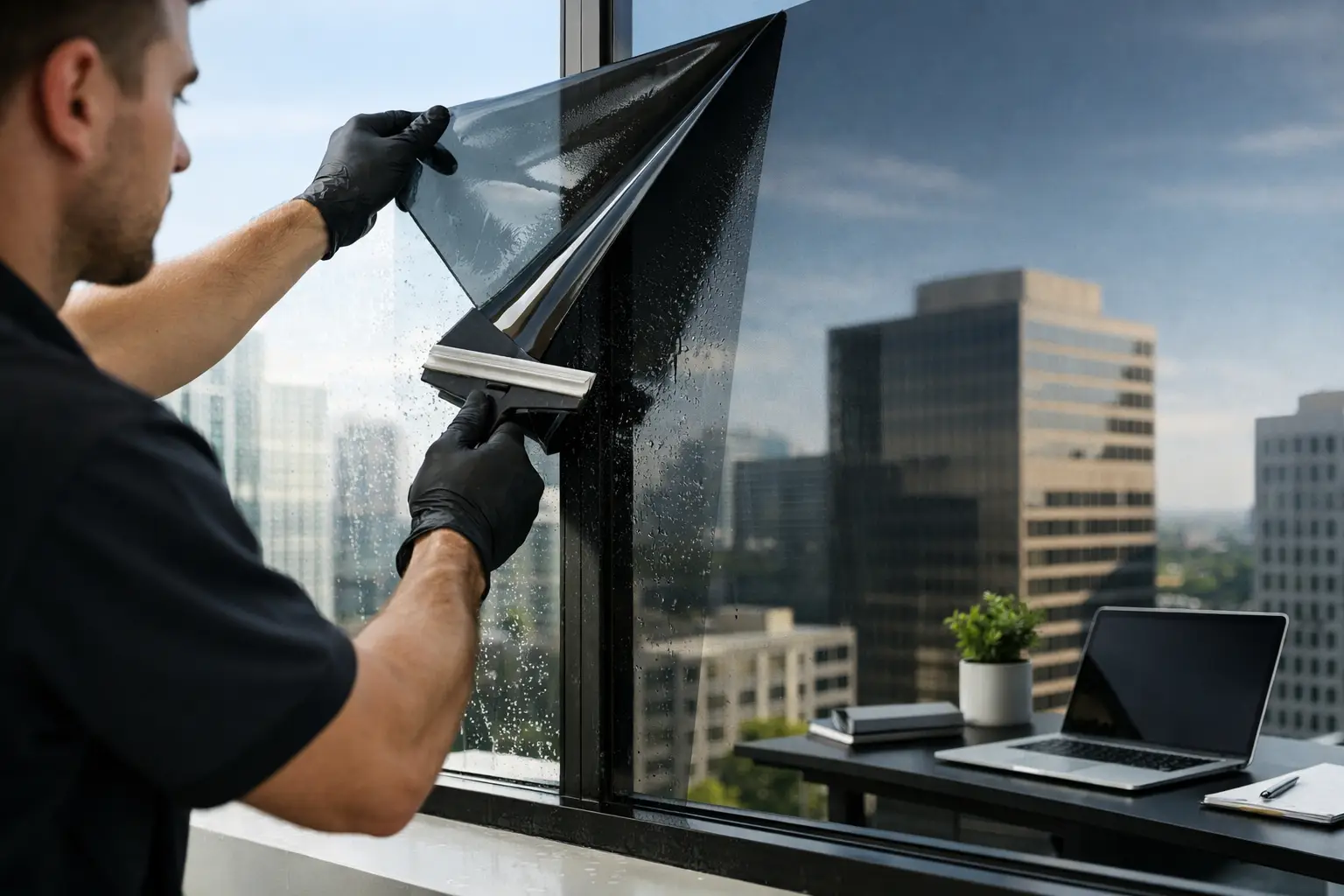
A bright office sounds great until the afternoon sun starts blasting screens, heating up conference rooms, and making front-facing offices feel like a greenhouse. If you’re researching how to tint office windows, you’re probably not chasing looks alone. You’re trying to cut glare, control heat, add privacy, and make the space feel better for the people who work there.
That goal is simple. The process is where people get tripped up.
Office window tint is one of those upgrades that can look easy from a distance but gets technical fast once you factor in glass type, building exposure, local code, and the actual performance you want. Pick the wrong film, and you might end up with a darker office that still runs hot. Install it poorly, and every bubble, crease, and edge flaw becomes part of the view.
How to tint office windows without guessing
The right way to approach office tinting is to start with the problem, not the film shade. Some businesses want daytime privacy. Others want heat rejection on west-facing glass. Some want a more polished exterior appearance across a storefront or office park suite. Those are different jobs, and they often call for different products.
Before anything goes on the glass, take a close look at what the windows are doing now. Are employees closing blinds all day because of glare? Are certain rooms consistently hotter than the rest of the building? Is furniture fading near the windows? Does the front office feel exposed from the parking lot? Those answers shape the film choice more than the building’s style does.
You also need to know what kind of glass you’re working with. Standard single-pane and double-pane glass can handle many commercial films, but some specialty glass and insulated units require more care. The wrong film can increase thermal stress, which is not something you want to discover after installation. That is one reason commercial tint jobs are usually better when they’re measured and specified by a pro.
Choose the right film for the job
There isn’t one universal office tint. Commercial films are built for different priorities, and each comes with trade-offs.
Solar control film is the most common choice for offices. It helps reject heat, reduce glare, and block UV exposure. If your biggest complaint is rooms heating up in the afternoon or staff fighting screen glare all day, this is usually where the conversation starts.
Reflective film adds daytime privacy and can give the building a cleaner, more uniform exterior look. It works well for storefronts and offices that want visibility from the inside out while limiting visibility from the outside in during daylight hours. The catch is that privacy changes at night when interior lights are on.
Dual-reflective and neutral films are good options when you want performance without pushing the building too dark or mirror-like. Many office managers want the comfort benefits of tint without changing the look of the space too aggressively. These films often hit that middle ground.
Decorative and frosted films are less about sun control and more about privacy and design. They’re popular for interior office glass, conference rooms, entry partitions, and spaces that need a cleaner branded look without shutting out light.
Security film is another category worth considering. It does not make glass unbreakable, but it can help hold shattered glass together longer during impact. For some offices, especially street-facing spaces, that added protection matters.
Prep matters more than people think
If you want to know how to tint office windows and get a clean, professional result, surface prep is where the job is won or lost. Office glass collects more contamination than most people realize. Dust from vents, fingerprints, tape residue, paint specks, hard water spotting, and old adhesive all interfere with proper film adhesion.
The glass needs to be thoroughly cleaned with the right tools and solution, then scraped carefully if needed with glass-safe blades. Frames, gaskets, and edges matter too. Any dirt left near the perimeter can get pulled under the film during install.
This is also the point where measurements need to be exact. Commercial windows can look uniform from across the room, but small differences in size are common. Film should be cut with precision so the finished edge looks intentional, not hacked in place.
The installation process
Once the glass is prepped, the film is measured, cut, positioned, and squeegeed onto the interior surface in most commercial applications. A slip solution helps the installer move the film into place before locking it down. Then the moisture is pushed out, the edges are checked, and the film is trimmed and finished cleanly.
That sounds straightforward, but large office panels, mullions, storefront systems, and high-traffic environments add difficulty fast. Even a small contaminant can show up as a visible flaw on a big piece of glass. So can uneven pressure, rushed trimming, or poor shrink and alignment work.
Drying time varies based on the film, weather, and indoor climate conditions. Some haze or a slightly milky look can be normal during curing. That usually clears as the moisture evaporates. What should not be normal are major bubbles, lifting corners, or dirty-looking trapped debris.
DIY vs professional installation
This is where a lot of business owners try to save money and end up paying twice.
Can you DIY office window tint? In a small private office with simple glass and basic expectations, maybe. If you’re tinting one or two manageable panes and already have film experience, it’s possible. But most office projects are not that forgiving.
Commercial spaces put flaws on display. Employees notice them. Customers notice them. If the tint is being installed on front-facing glass or conference rooms, appearance matters just as much as performance. Add in the risk of choosing the wrong film for insulated glass or local building requirements, and DIY becomes less appealing.
Professional installation brings more than labor. It gives you product guidance, glass compatibility checks, cleaner finishing, and usually a warranty on film and workmanship. For a business, that matters. You’re not just buying darker windows. You’re investing in comfort, appearance, and long-term performance.
Cost depends on more than square footage
People often ask for a per-window price, but office tinting does not work that cleanly. Cost depends on the number of windows, total square footage, glass accessibility, film type, and whether the job involves standard exterior glass, interior partitions, decorative film, or security applications.
A basic solar control film on accessible office windows will typically cost less than premium ceramic or specialty reflective film on a large storefront. Installation complexity also moves the number. Second-story work, oversized panes, after-hours scheduling, and removal of old film all add time and labor.
That said, the cheapest option is rarely the best value. If the goal is to reduce heat load, improve employee comfort, and protect interiors from UV damage, quality film pays back differently than bargain film. Better products tend to look better longer and perform more consistently.
Common mistakes to avoid
The biggest mistake is choosing film based on darkness alone. Darker does not automatically mean better heat rejection. Some lighter, higher-quality films outperform darker budget films by a wide margin.
Another mistake is ignoring the building’s actual sun exposure. East-facing and west-facing glass usually take the hardest hit. If only certain sides of the office overheat, a targeted plan may make more sense than tinting every window the same way.
Some offices also overlook aesthetics from both sides of the glass. The film should work with your building’s appearance, interior lighting, and day-to-day use. A highly reflective product might be perfect for one storefront and wrong for a professional office that wants a softer look.
And then there’s maintenance. Freshly installed film needs time to cure before cleaning. After that, use film-safe cleaning methods. Harsh chemicals and abrasive tools can shorten the life of the finish.
When office tinting is absolutely worth it
If your office struggles with hot spots, screen glare, fading interiors, or privacy issues, tint is usually one of the smartest upgrades you can make without tearing into the building. It’s faster and less disruptive than major window replacement, and the visual improvement is immediate.
It also helps your space work harder. Employees are more comfortable. Front offices feel more polished. Conference rooms become easier to use during the day. And if your building gets a lot of Florida sun, reducing heat gain is not a cosmetic perk. It’s a real operational benefit.
For businesses that want the job done clean, matched to the glass, and built around the way the space actually functions, working with an experienced shop like Tint Station makes the process a lot easier.
The best office tint job should feel obvious after it’s done, not because the glass looks flashy, but because the whole space works better the minute the sun hits it.