
Quick answer
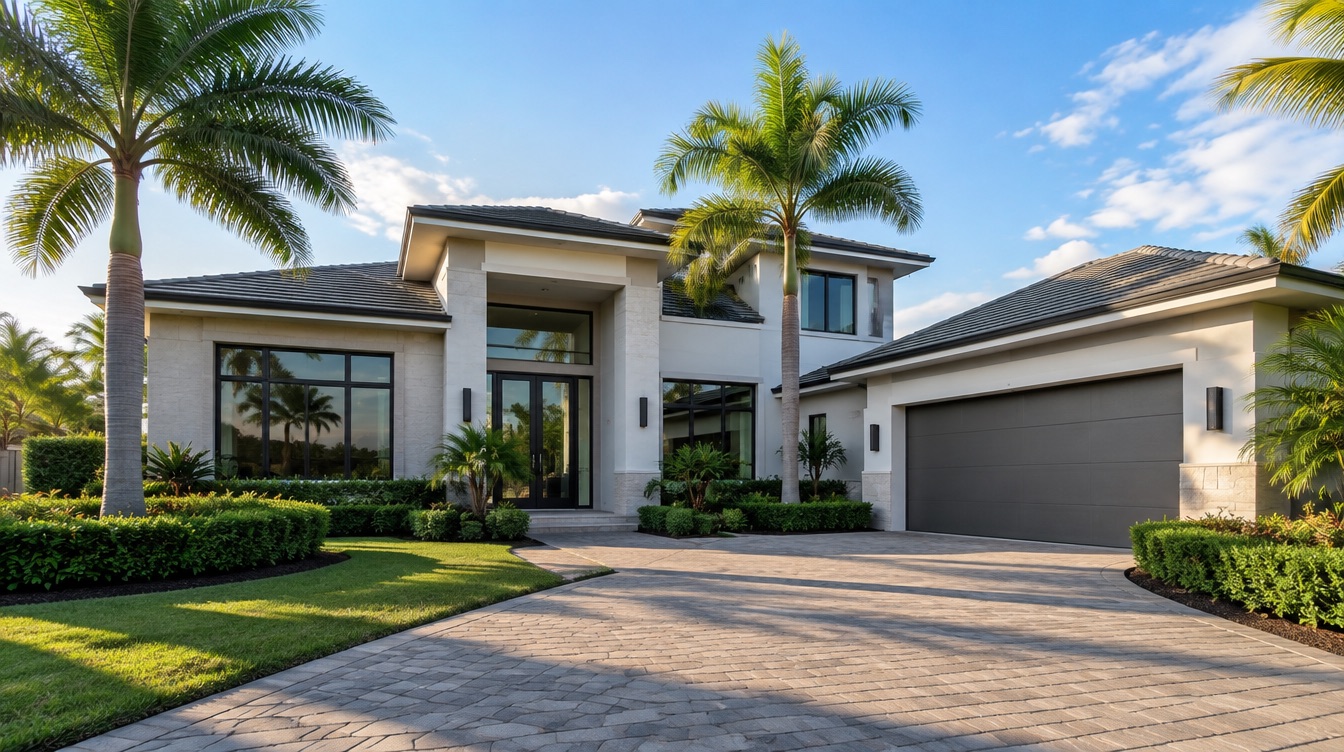
For residential window tinting in Highland Beach, call Tint Station at (561) 821-8356. We come to your home from our Deerfield Beach shop, measure every pane and show film samples against your glass before you choose. Residential film rejects the majority of solar heat, stops up to 99% of UV fading, cuts glare and adds daytime privacy, with a lifetime manufacturer-backed warranty.
Why Highland Beach homeowners choose Tint Station for residential window tinting
Tint Station has installed film in Highland Beach homes from the same Deerfield Beach shop for years. Here is why homeowners keep choosing us for residential window tinting in Highland Beach.
- Close enough to be routine. The shop is about 20 minutes from Highland Beach via Spanish River Boulevard, Yamato Road and I-95 south, so a follow-up visit or a second room later is never a problem.
- Professional-grade film only. Heat-rejecting ceramic, dual-reflective privacy, frosted and clear safety film with a lifetime manufacturer warranty, never the dyed film that turns purple after one Florida summer.
- Work that fits Highland Beach life. We regularly serve oceanfront high-rise condominiums on A1A, estate homes on both the ocean and Intracoastal sides, and townhome communities along South Ocean Boulevard. That experience shapes the film, the shade and the schedule we recommend.
Highland Beach home window film: free in-home estimates, call (561) 821-8356.
Free quotes • Lifetime manufacturer-backed film warranty • 20+ years of experience
What does residential window tinting in Highland Beach include?
Most people searching for residential window tinting in Highland Beach want to know three things: what the film does, what the visit involves, and who shows up at the door. Here are the straight answers.
What the film does
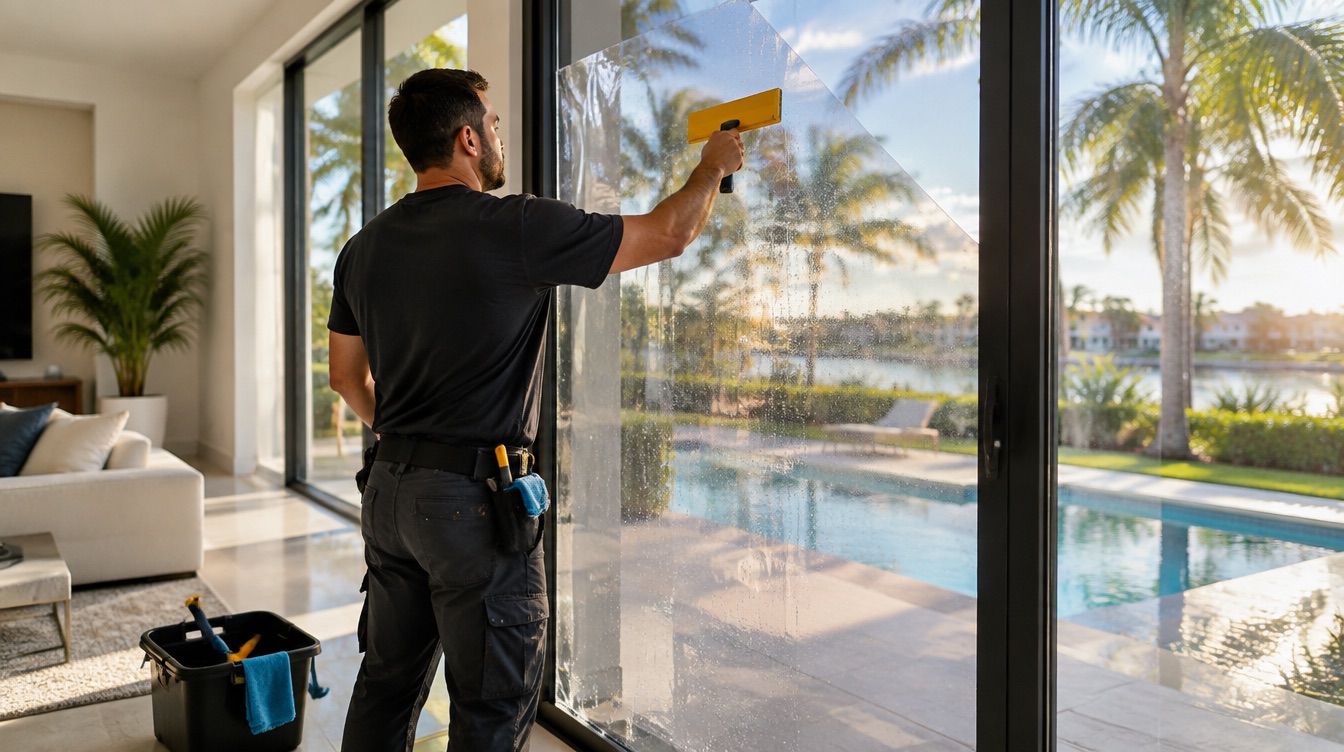
Professional residential film is a thin, optically clear or lightly tinted polyester laminate with ceramic or metallic layers that reject solar heat, block up to 99% of ultraviolet light and cut glare. It installs on the interior surface of the glass, so there is no construction, no replacement and no change to the window itself. Frosted and safety films use the same approach for privacy and glass retention.
What the visit involves
One visit for the estimate, one for the install. At the estimate we measure every pane and put sample film on your glass, usually on the window that bothers you most. On install day we prep, cut, apply and clean, working around your schedule, including evenings and weekends. From A1A (South Ocean Boulevard) to the western edge of Highland Beach, the process is the same.
Who shows up
Ramsey has run Tint Station from 236 SW 12th Ave in Deerfield Beach for more than 20 years, and he still measures and installs residential jobs himself. His installers follow the same standard on every property, across oceanfront high-rise condominiums on A1A, estate homes on both the ocean and Intracoastal sides, and townhome communities along South Ocean Boulevard. Highland Beach is close enough that a follow-up visit is never a problem.
The residential window tinting guide covers the film lineup in depth, and the residential security systems page explains how safety film fits with the rest of a home’s protection.
Which home window film is right for Highland Beach homes and condos?
Four kinds of film cover almost every request we get from Highland Beach homeowners. The difference between them is what they do to light, and that decides where each one belongs.
Ceramic heat-rejecting film
Nano-ceramic film rejects far more heat than dyed film and stays nearly clear, so a living room keeps its view and its daylight while the afternoon heat load drops. It is the film we recommend most often, because it handles the direct ocean glare and salt air on large oceanfront glass, from sunrise over the Atlantic to the reflected afternoon light off the Intracoastal without darkening the room.
Dual-reflective privacy film
A dual-reflective film is more reflective on the outside than the inside. In daylight, people outside see a soft mirror and you see out normally. It is the right call for a bedroom that faces the street or a ground-floor unit in the oceanfront condominiums on A1A.
Frosted and decorative film
Frosted film turns a clear pane into diffused glass. Bathrooms, shower enclosures and the sidelights beside a front door are the usual spots. Patterns and gradients are available for home offices and pantry doors.
Clear safety film
Safety film is a thick, optically clear laminate that holds glass together when it breaks. It goes on sliding glass doors and any ground-floor glass that is not impact-rated. Our residential security systems page covers how it fits with the rest of a home’s protection.
The residential window tinting guide goes deeper on each film, and the International Window Film Association explains how VLT, UV rejection and solar energy rejection are measured.
Will window film keep my house cooler and stop fading?
Yes, on both counts, with the usual caveat that film works on the glass, not on the roof or the walls. In a Highland Beach home, a large share of the heat that reaches the thermostat comes straight through the windows, and that is the share film removes. A nano-ceramic film rejects the majority of infrared heat before it enters the room, so the air conditioner cycles less in the afternoon and the hot spot in front of the slider goes away.
The U.S. Department of Energy lists window films among the energy-efficient window attachments that reduce solar heat gain in cooling climates, and South Florida is about as cooling-dominated as the country gets. We size the film to the exposure, which in Highland Beach means the direct ocean glare and salt air on large oceanfront glass, from sunrise over the Atlantic to the reflected afternoon light off the Intracoastal: a stronger heat-rejecting film on the worst-facing walls and a lighter film elsewhere.
Fading is the second half of the answer. Hardwood floors, upholstery, rugs, photographs and art fade from three things: ultraviolet light, visible light and heat. Film cannot stop visible light without darkening the room, but it blocks up to 99% of UV and a large share of the heat, which together account for most of the damage. The Skin Cancer Foundation makes the same point about people: window film works as sunscreen for your home, protecting skin in the rooms you sit in every day.
Homeowners notice it first on the sofa or rug that sits in the afternoon sun: the fade line stops advancing once film is on the glass. Read does window tint block UV for the details, and home window tint for heat reduction for the exposure-by-exposure heat story.
Does home window tint make rooms dark or break HOA rules?
Not with the film we use for most homes. The image of dark, mirrored house windows comes from older metallic films. A modern nano-ceramic film in a light shade rejects most of the heat while letting the majority of visible light through, so the room reads bright and the glass looks like glass. Most people cannot tell it is there until they notice the room is cooler.
HOA and condo rules are a real consideration across oceanfront high-rise condominiums on A1A, estate homes on both the ocean and Intracoastal sides, and townhome communities along South Ocean Boulevard. Most associations regulate the exterior appearance: reflectivity, color and a uniform look from the street. A neutral, low-reflectivity ceramic film is the safest choice under most rules, and when an association specifies a shade or a reflectivity limit, we match it. We bring samples to the estimate so you can photograph the exterior look and send it to the board before anything is installed.
One honest point about privacy. Dual-reflective film gives one-way privacy in daylight because the outside is brighter than the inside. After dark, with the lights on, that reverses and people can see in. If nighttime privacy matters, the answer is frosted film, blinds or drapes, not a darker tint. We say this at every Highland Beach estimate because it is the most common misunderstanding about home film.
The International Window Film Association publishes plain-English explanations of VLT, UV rejection and solar energy rejection, which is worth reading before you compare sample cards. For the privacy side, read privacy window film for a house.
How does a residential install day work?
A residential install is quiet, clean and usually finished in one day. Here is the sequence, from the estimate to the first cleaning.
- Free in-home estimate. We measure every pane and put samples on your glass. Highland Beach is a regular stop for us, and we plan the drive around A1A residents with luxury sedans and convertibles so the arrival window holds.
- Prep. On install day we move or cover furniture near the windows, lay drop cloths and clean each pane with a slip solution and a razor. Dust is the enemy of a clean install, so the glass gets more attention than you expect.
- Cut and apply. Film is cut to each pane, wet-applied to the interior surface and squeegeed from the center out until the water is gone. Edges are trimmed to a fine, even gap.
- Walk-through. We check every window with you, explain the slight haze or small water pockets that are normal while film cures, and leave the warranty paperwork.
- Cure. Film cures over a few weeks in Florida humidity. Do not clean the glass for 30 days; after that, use a soft cloth and an ammonia-free cleaner.
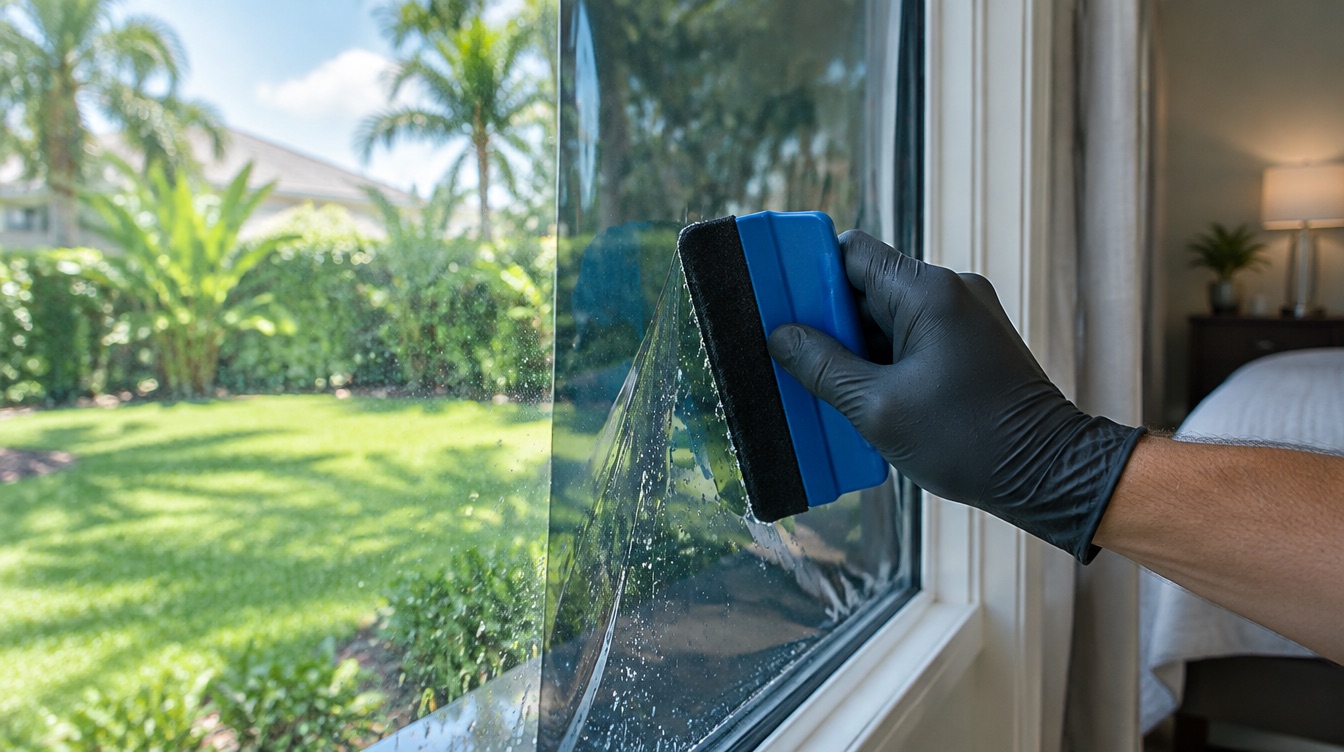
Sliding glass doors and condo sliders are the panes we are asked about most. They are large, they take the most sun and they get the most use, so they are usually first in the day. For high-rise condos we coordinate with the building for elevator access and work within the association’s hours. The residential window tinting service page has the booking details, or call (561) 821-8356.
How on-site residential window tinting works in Highland Beach
Here is how a typical Highland Beach job runs, from the first call to the finished glass.
- Call or request a quote. Tell us the property, the number of windows and what is bothering you most: heat, glare, privacy or security.
- We visit and measure. Highland Beach is about 20 minutes from Deerfield Beach via Spanish River Boulevard, Yamato Road and I-95 south. We check every pane and show samples on your glass.
- Install day. Most homes are finished in a day; larger commercial jobs run floor by floor or after hours so nothing shuts down.
- Cure and care. Film cures over a few weeks; we explain cleaning and your manufacturer-backed warranty before we leave.
Tint Station
236 SW 12th Ave, Deerfield Beach, FL 33442
Phone: (561) 821-8356 · Email: tintstationllc@gmail.com
Get directions from Highland Beach on Google Maps
More from Tint Station for Highland Beach
Start with the full residential window tinting guide, then explore the other services we provide for Highland Beach.
Residential window tinting in Broward and Palm Beach
Heat-rejecting ceramic, privacy, frosted and safety film for houses and condos, measured and installed at your home with a free in-home estimate and a lifetime manufacturer-backed warranty.
Residential window tinting in Palm Beach County
Every Palm Beach County city we serve for residential window tinting, with drive times, film options and what to expect.
Car audio installation in Highland Beach
CarPlay, speakers, subs and amps for Highland Beach drivers, installed in our Deerfield Beach bays.
Car window tinting in Highland Beach
Ceramic and carbon car tint for Highland Beach drivers, computer-cut and installed in our Deerfield Beach bay in 2 to 3 hours.
Commercial window tinting in Highland Beach
Office and storefront film for Highland Beach, measured and installed on site around your business hours.
All service areas
Every Broward and Palm Beach County community Tint Station serves from Deerfield Beach.
Serving Highland Beach from Deerfield Beach
Tint Station is at 236 SW 12th Ave, Deerfield Beach, FL 33442, just west of I-95 at the SW 10th Street exit, and serves all of Broward and Palm Beach counties. Open Monday to Saturday, 10:00 AM to 7:00 PM, and Sunday by appointment. Call (561) 821-8356 or request a free quote online.
Reviewed by Ramsey, owner and lead installer at Tint Station, with 20+ years of window film and vehicle customization experience. Last reviewed October 2026.
Frequently asked questions
Will window film really make my rooms cooler?
Yes. A nano-ceramic film rejects the majority of infrared heat before it enters the room, so west- and south-facing rooms stop spiking in the afternoon and the air conditioner cycles less. Film works on the glass, not the roof or walls, but in a Florida home the windows are usually the largest single source of afternoon heat.
Does window film stop furniture and floors from fading?
It slows fading dramatically. Professional film blocks up to 99% of ultraviolet light, the main cause of faded fabric, wood finishes and photographs, and a heat-rejecting film removes much of the heat that accelerates the damage. Visible light still gets through, so nothing fades to zero, but the fade line on a sofa or rug stops advancing.
Can people see into my house at night with privacy film?
With a reflective or dual-reflective film, yes, once your interior lights are brighter than the outside. One-way privacy works in daylight only. For nighttime privacy, use frosted film on the glass that matters or keep blinds and drapes. We explain this at every estimate so there are no surprises after the install.
Will my HOA or condo association allow window film?
Usually, yes. Most associations regulate exterior appearance: reflectivity, color and a uniform look from the street. A neutral, low-reflectivity ceramic film satisfies most rules, and if your association has an approved list or a reflectivity limit we match it. We put the sample on your glass so you can photograph the exterior look for the board before installing.
Do you offer residential window tinting in Highland Beach?
Yes. Tint Station serves houses, townhomes and condos throughout Highland Beach from our shop at 236 SW 12th Ave in Deerfield Beach, via Spanish River Boulevard, Yamato Road and I-95 south. The estimate, the film samples and the installation all happen at your home. Call (561) 821-8356 or request a free in-home estimate online.
How far is Tint Station from A1A (South Ocean Boulevard)?
From A1A (South Ocean Boulevard), the shop at 236 SW 12th Ave, Deerfield Beach, FL 33442 is about 20 minutes. For home work the distance matters less than the schedule, because we come to you for the estimate and the installation. The shop is where samples and film stock are kept, and you are welcome to visit.
When can you visit a Highland Beach home for an estimate?
We work Monday to Saturday from 10:00 AM to 7:00 PM (Sunday by appointment), and estimate visits in Highland Beach are booked within that window, including evenings and weekends. The measure usually takes under an hour, and you see film samples on your own glass before deciding. Call (561) 821-8356 to set a day.
Call us today to book your free Highland Beach in-home estimate.
Open Monday to Saturday 10:00 AM to 7:00 PM, Sunday by appointment • Owner-run for 20+ years