
Boat Stereo System Installation Done Right
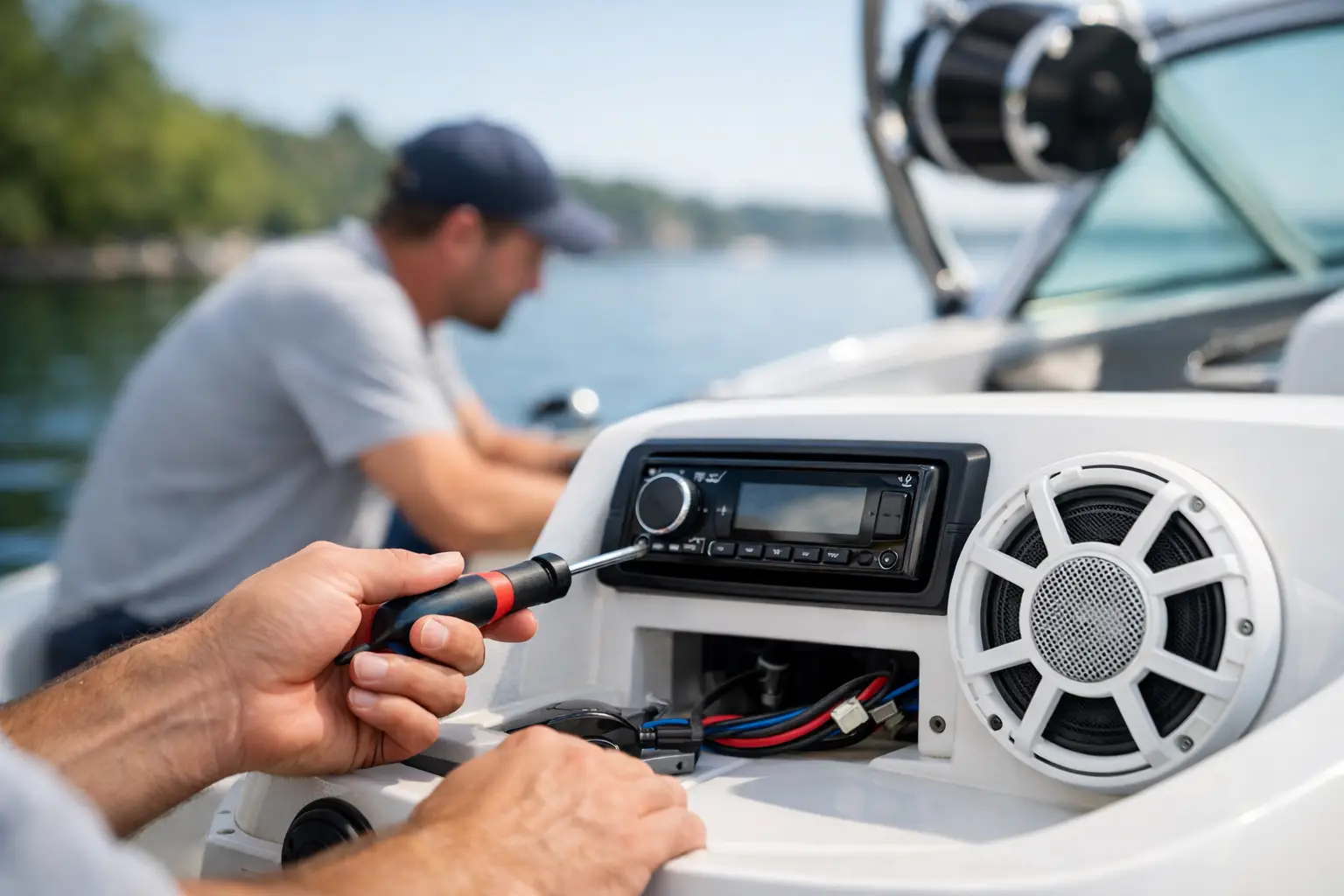
One rough afternoon on the water is all it takes to expose a bad audio setup. Speakers cut out, the head unit fogs up, wiring corrodes, and suddenly that “good enough” install doesn’t feel good at all. That’s why boat stereo system installation is less about adding music and more about building a system that can survive sun, spray, vibration, and long days offshore or at the sandbar.
Marine audio is its own category for a reason. A boat is a harsher environment than a car, and the install matters just as much as the gear. If you want clear sound at speed, reliable performance, and a clean finished look, every part of the system has to be chosen and installed with the marine environment in mind.
What makes boat stereo system installation different
A boat stereo can’t be treated like a car stereo with a few waterproof parts. Moisture is the obvious problem, but it’s not the only one. UV exposure breaks down materials over time, vibration loosens connections, salt accelerates corrosion, and open-air listening demands more output than an enclosed cabin.
That changes the way the whole system should be built. Wiring has to be protected. Mounting locations have to make sense for both sound and durability. Power draw has to match the boat’s electrical setup. Even speaker placement becomes a bigger deal because there are fewer surfaces to reflect sound and more engine, wind, and water noise to overcome.
A strong marine install is a balance of performance and restraint. Bigger is not always better. On some boats, a modest system with quality speakers, proper amplification, and clean tuning will outperform a louder setup that was thrown together without a plan.
Start with how you use the boat
The best boat stereo system installation starts with the way the boat actually gets used. A center console used for fishing has different needs than a wake boat built for entertaining. A pontoon cruising the Intracoastal calls for a different speaker layout than a performance boat that spends most of its time running at speed.
If you mainly anchor out and entertain, you may want stronger low-end response, more speaker coverage, and better control zones so people at the bow and stern both hear clean music. If you run hard and fast, output and clarity matter more than deep bass alone. If the boat sits in full South Florida sun, UV-resistant materials and protected mounting locations become even more important.
This is where experienced planning pays off. A system should fit the boat, the electrical capacity, and your expectations. There’s no point in chasing a showroom sound profile if what you really need is loud, clean music that holds up on open water.
Choosing the right components for marine audio
The head unit is still the control center, but today’s marine systems often go beyond a traditional receiver. Some owners want a compact source unit with Bluetooth and simple controls. Others want a full-featured media receiver with zone control, app integration, and higher-voltage preouts for cleaner signal to amps.
Speakers are where many installs go right or wrong. True marine speakers are built with materials that resist water, sun, and corrosion. That does not mean every marine speaker performs the same. Some are designed for background listening, while others are built to project over wind and engine noise. Matching the speaker to the use case matters more than chasing a brand name alone.
Amplifiers are often the difference between average sound and a system that actually performs outside. Open-air listening eats power. Without proper amplification, even good speakers can sound thin or strained. The trade-off is power management. More amplification means more current draw, which has to be accounted for in battery capacity, charging, and system design.
Subwoofers can add serious impact, but they’re not mandatory on every boat. On some layouts, a compact marine sub rounds out the system perfectly. On others, the available enclosure space, ventilation, and power limitations make it smarter to focus on strong full-range speaker performance instead.
Boat stereo system installation and power planning
Power is where a lot of marine audio problems begin. You can install premium gear and still end up with weak performance or reliability issues if the electrical side isn’t handled correctly.
A boat stereo system installation should account for battery setup, charging system output, fuse protection, wire gauge, and how long the system may run while the engine is off. If you spend hours anchored with music playing, battery management is a real concern. A dual-battery setup or battery isolator may make sense depending on the system and boating habits.
Wire sizing is another place where shortcuts show up later. Undersized power wire can lead to voltage drop, poor amplifier performance, and overheating. Poor grounding causes noise and instability. Cheap connections corrode. Marine-rated wiring, sealed terminations, and proper routing are not glamour items, but they are what keep the system dependable.
Placement matters more than most people expect
On a boat, there are fewer places to hide mistakes. Speaker location affects volume, imaging, and how evenly the system fills the boat. Mounting too low, too exposed, or too close to problem areas can hurt both sound and lifespan.
The same goes for amps and source units. Electronics need protection from direct spray and excessive heat, but they also need accessible service locations and safe ventilation. A clean install should look factory or better, not like an afterthought with exposed wiring and random hardware.
There is always some compromise in marine customization. The perfect acoustic position may not be the best structural position. The best hidden location may reduce service access. Good installation is knowing where to push for performance and where to protect long-term reliability.
Why tuning is part of the installation
A lot of people think the job is done once the gear is mounted and powered up. It isn’t. Tuning is what turns a collection of components into a real system.
Gain structure, crossover settings, source level, and speaker balance all matter. In marine audio, tuning gets even more important because the listening environment is so inconsistent. What sounds balanced at idle can change when the boat is moving. A properly tuned system keeps vocals clear, controls harshness, and lets the bass hit without drowning everything else out.
This is one of the biggest differences between basic installation and custom installation. A custom setup is built around the actual boat and the actual owner, not just the parts list.
Common mistakes to avoid
The most common mistake is mixing marine and non-marine gear to save money. It may work for a while, but the environment usually wins. Another issue is overbuilding the system without upgrading the power side, which leads to battery drain and unreliable performance.
Poor mounting choices are also common. Cutting into the wrong panel, placing speakers where they take direct abuse, or mounting electronics in damp compartments can shorten the life of the system fast. Then there’s the cosmetic side. Crooked cutouts, visible wiring, and mismatched trim pieces can drag down the whole look of a nice boat.
For owners who care about both performance and finish quality, craftsmanship matters. Clean routing, secure mounting, weather-resistant connections, and a layout that feels intentional make a big difference.
When professional installation is worth it
If the goal is a basic replacement of one marine head unit and a pair of speakers, some boat owners may handle it themselves. But once you add amplifiers, multiple speaker zones, subs, battery upgrades, lighting integration, or custom panels, the margin for error gets smaller.
Professional installation is usually worth it when you want the system to look clean, play hard, and hold up season after season. That’s especially true in South Florida, where sun, heat, humidity, and salt all work against your equipment. A shop that understands custom audio and marine conditions can build around those realities instead of pretending they don’t exist.
At Tint Station, that’s the advantage of working with a team that lives in custom installs every day. The goal isn’t to sell the biggest setup on paper. It’s to build the right one for your boat, your style, and the way you use the water.
What to expect from a quality marine audio upgrade
A well-executed marine audio system should sound cleaner before it sounds louder. You should hear stronger vocals, better detail, and fuller output across the boat. Controls should be easy to reach. The system should start reliably, operate without weird noise or signal issues, and look like it belongs there.
The best upgrades also leave room to grow. Maybe you start with speakers, a source unit, and an amp now, then add a sub or extra zone later. That kind of planning saves money and avoids redoing work.
If you’re thinking about boat stereo system installation, the smartest first move is not picking random parts online. It’s figuring out how you use the boat, what kind of sound you want, and how much reliability matters when the water gets rough. Get that part right, and the music becomes one of the best upgrades on board.