
Dyed vs Ceramic Tint: Which One Fits You?
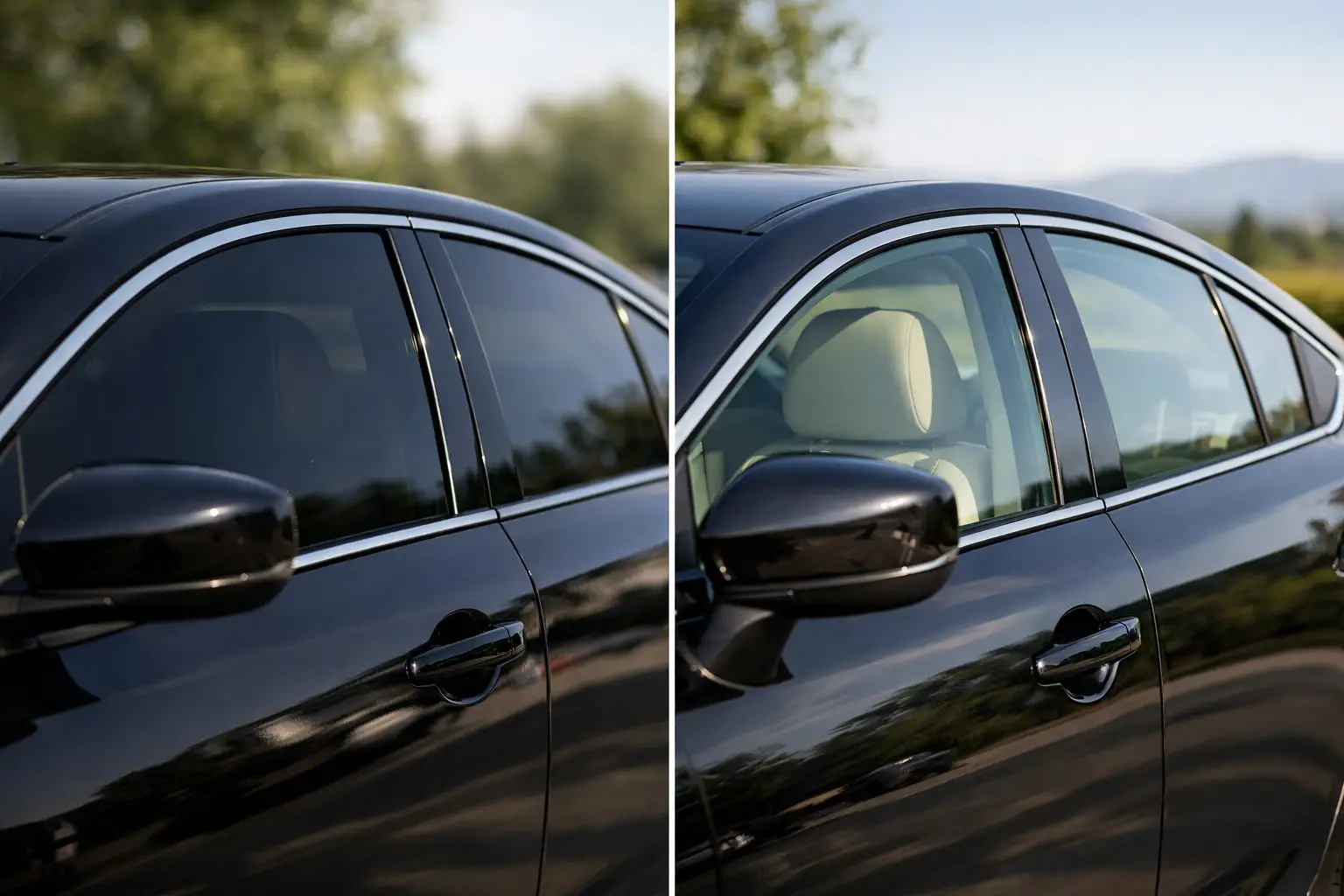
That cheap tint quote can look great right up until your cabin still feels like an oven in July. When customers ask about dyed vs ceramic tint, they’re usually really asking a bigger question: do you want the lowest upfront cost, or do you want tint that works harder every day you own the vehicle?
Both films can improve appearance, add privacy, and cut glare. But they do not perform the same way, and the gap becomes obvious fast in places like South Florida, where sun exposure is not occasional – it’s constant. If you care about comfort, interior protection, and getting real value out of the install, the details matter.
Dyed vs ceramic tint at a glance
Dyed window tint is the more budget-friendly option. It uses a dye layer to darken the glass and reduce visible light. For drivers who want a cleaner look and some glare control without stretching the budget, dyed film can make sense.
Ceramic tint is a premium film built with non-metallic ceramic particles. That matters because the film is designed to block more heat and UV without interfering with electronics. It is not just about making the windows darker. It is about performance.
If your main goal is appearance at the lowest price, dyed film may check the box. If your goal is heat rejection, long-term comfort, and a better overall driving experience, ceramic is usually the stronger move.
What dyed tint does well
Dyed tint still has a place, and pretending otherwise does not help anyone. For some vehicles, especially older daily drivers or short-term ownership situations, it can be a practical choice.
The biggest draw is price. Dyed film costs less than ceramic, which makes it appealing if you want privacy and style without turning a tint job into a major investment. It also gives a softer, darker appearance that many drivers like.
It helps with glare, and it offers some UV protection depending on the film quality. It can also improve cabin comfort compared to bare glass. But that improvement has limits, especially when the sun is hitting hard for hours at a time.
The trade-off is that dyed film usually does not reject heat at the same level as ceramic. Over time, lower-grade dyed films can also fade or shift in color. That can leave you with a purplish or washed-out look that cheapens the whole vehicle.
Why ceramic tint costs more
Ceramic tint costs more because it does more. That sounds simple, but it is the real answer.
A quality ceramic film is engineered to reduce heat far more effectively than dyed film, even when the shade looks similar. Two cars can have windows that appear equally dark from the outside, but the one with ceramic tint often feels noticeably cooler inside.
That becomes a major difference in Florida heat, on black interiors, in trucks with big glass areas, and for anyone parking outside during the workday. Better heat rejection means less strain on the AC, a more comfortable cabin, and less punishment for your dash, seats, trim, and electronics.
Ceramic film also blocks strong UV exposure, which helps protect interior materials from fading and cracking. And because it is non-metallic, it typically will not disrupt cell signal, GPS, Bluetooth, or radio performance. For modern vehicles loaded with tech, that matters a lot more than it used to.
Heat rejection is where the gap shows up
If you are deciding between dyed vs ceramic tint based on performance, heat rejection is the category to watch most closely.
A lot of people assume darker tint automatically means better heat control. That is not how it works. Darkness affects how much visible light gets through the glass. Heat rejection depends on the film technology itself.
That is why a lighter ceramic film can outperform a darker dyed film. You may keep a cleaner, more legal, more comfortable setup while still getting stronger solar control. For customers who want a sharp look without going extremely dark, that flexibility is a big advantage.
This is also where professional guidance matters. The right film choice depends on your vehicle, your local laws, your parking habits, and how sensitive you are to cabin heat. Someone commuting daily in South Florida has different needs than someone driving mostly at night in a milder climate.
Appearance, clarity, and long-term look
Both dyed and ceramic tint can look excellent when installed properly. Clean edges, smooth shrink work, and a dust-free finish matter just as much as the film type. Bad installation can make premium film look average in a hurry.
That said, ceramic films often hold their appearance better over time. They are generally more color-stable and less likely to fade. If you are putting tint on a newer vehicle, a luxury model, a performance build, or a truck you take pride in, the long-term finish matters.
Clarity is another factor people notice after the install. Premium ceramic films often provide a crisper view from inside the vehicle, especially at night. That does not mean every dyed film has poor visibility, but lower-end products tend to show their limitations sooner.
If you are aiming for a refined, high-end result rather than just a darker window, ceramic usually supports that goal better.
Is dyed vs ceramic tint really about budget?
Partly, yes. But only partly.
If you compare quotes only by the number at the bottom, dyed tint will often win. The problem is that the cheapest option is not always the least expensive over the life of the vehicle. If the film fades, performs weakly against heat, or leaves you wanting an upgrade later, you can end up paying twice.
Ceramic costs more upfront, but it often makes more sense for drivers who keep their vehicles longer, care about cabin comfort, or want premium results the first time. In other words, the better value depends on how you use the vehicle and how long you plan to own it.
For a lease return or budget-focused daily driver, dyed may be enough. For a family SUV, work truck, high-end car, or anything living under intense sun, ceramic tends to justify itself faster.
Who should choose dyed tint?
Dyed tint can be the right fit if your priorities are straightforward. You want a better look, added privacy, reduced glare, and a lower entry price. Maybe the vehicle is older, maybe it is not your forever ride, or maybe you simply do not need top-tier heat performance.
That is a valid decision. Not every build needs the premium option. The key is going in with realistic expectations. Dyed tint improves appearance and helps somewhat with comfort, but it is not the strongest performer for heat-heavy climates.
Who should choose ceramic tint?
Ceramic is the better fit for drivers who spend serious time on the road, park outside often, or want the best all-around tint experience. It is especially strong for South Florida vehicles, family haulers, luxury cars, performance builds, and trucks with large cabins that soak up heat.
It also makes sense if you care about preserving your interior, avoiding signal interference, and getting a cleaner long-term result. When you want the tint to be more than cosmetic, ceramic is usually the answer.
At Tint Station, this is the kind of choice we help customers make every day. The right film is not just about what looks good on day one. It is about how the vehicle feels and performs after months of real sun, real heat, and real use.
The best choice depends on how you drive
There is no universal winner in dyed vs ceramic tint if you ignore context. A budget-minded driver with modest expectations may be perfectly happy with dyed film. A customer who wants premium heat rejection and long-term performance will almost always be happier with ceramic.
The mistake is choosing based on darkness alone or assuming all tint is basically the same. It is not. Film technology, installation quality, and your daily conditions all shape the result.
If you are trying to decide, think beyond the initial quote. Think about where the car sits during the day, how hot the cabin gets, how long you plan to keep it, and whether you want a basic upgrade or a serious one. The right tint should match the way you actually use your vehicle – and when it does, you feel the difference every time you get behind the wheel.