
How to Improve Boat Sound Quality the Right Way
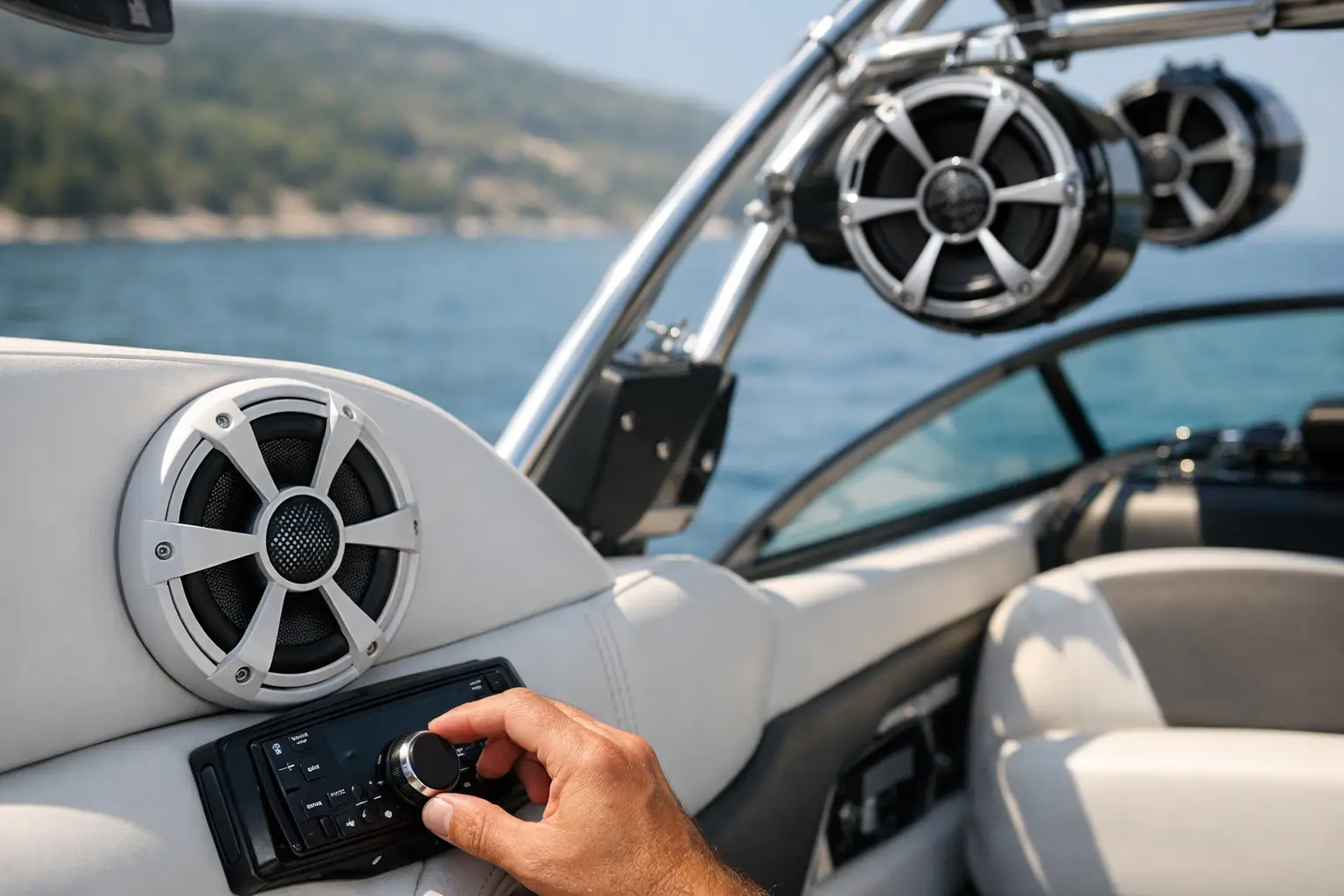
A boat stereo can sound incredible at the dock, then disappear the moment the engine starts, the wind picks up, and your crew gets moving. That is why learning how to improve boat sound quality means looking beyond louder speakers. Great marine audio is a complete system built to overcome open-air noise, vibration, water exposure, and the unique layout of your boat.
Whether you run a center console, wake boat, pontoon, fishing boat, or cabin cruiser, the right upgrades can turn a weak, distorted setup into clean, confident sound that carries where you want it. The goal is not simply maximum volume. It is music that stays clear, controlled, and enjoyable from the helm to the swim platform.
How to Improve Boat Sound Quality Starts With the System
The biggest mistake in marine audio is replacing one component and expecting a complete transformation. A new pair of speakers may improve detail, but they cannot fix an underpowered amplifier, poor wiring, an outdated source unit, or speakers installed in locations that work against them.
Think of your boat audio system as a chain. The source unit sends the signal, amplifiers provide clean power, speakers turn that power into sound, and installation determines how well every piece performs under real boating conditions. A weak link can limit the entire experience.
Start by identifying what is actually wrong with your current setup. If the music gets harsh when you turn it up, you may be dealing with clipping from an underpowered amp or an improperly tuned system. If vocals disappear at cruising speed, speaker placement and output may be the issue. If bass rattles panels but lacks impact, the problem may be enclosure design, mounting, or tuning rather than the subwoofer itself.
Choose Marine-Rated Speakers, Not Just Any Speakers
Marine speakers are designed for the environment your boat lives in. Salt air, humidity, UV exposure, spray, and heat can quickly ruin standard car audio components. Marine-rated speakers use more durable materials, sealed motor structures, corrosion-resistant hardware, and UV-stable grilles to hold up season after season.
Quality matters here. Low-cost speakers may look similar from the outside, but they often fade, crack, corrode, or lose clarity faster when exposed to Florida sun and water. A better speaker delivers cleaner highs and stronger midrange, but it also gives you a system that is worth investing in because it is built for the job.
Speaker size should match the boat and the listening area. Six-and-a-half-inch speakers can work well in smaller cockpits, while larger 8-inch or 10-inch marine speakers can provide more output and fuller midbass on bigger boats. More size is not always better, though. A properly installed, powered, and tuned speaker will outperform a larger speaker that is mounted poorly.
Give Your Speakers Clean, Adequate Power
Marine speakers need real amplifier power to stay clean at volume. The small amplifier built into many head units is enough for quiet listening at the dock, but it will struggle once wind, waves, engines, and conversations enter the picture.
An external marine amplifier gives speakers the headroom they need. Headroom is what keeps music sounding controlled when you turn it up instead of becoming sharp, compressed, or distorted. It also helps your system project sound without forcing the volume knob to its limit.
Match the amplifier to the speakers based on RMS power ratings, not peak wattage claims. RMS is the realistic power level a component can handle continuously. An amp that provides clean power within the speaker’s RMS range is usually a smarter choice than chasing the highest number on a product box.
Power upgrades also require the right electrical foundation. Marine-grade power cable, proper fusing, secure ground points, and corrosion-resistant connections are not glamorous additions, but they are essential. Loose grounds and undersized wiring can create noise, reduce performance, and cause reliability issues when you are far from shore.
Add Bass With a Marine Subwoofer
Open air eats bass. On a boat, you do not have the sealed cabin of a car to help low frequencies feel stronger, so a subwoofer can make a dramatic difference. It fills in the depth that small full-range speakers cannot reproduce and lets the main speakers focus on cleaner mids and highs.
The enclosure is as important as the subwoofer. A marine sub mounted in the wrong enclosure can sound muddy, weak, or overly boomy. Custom enclosures can be designed around available storage, seating layouts, and the way you use the boat, whether you want a subtle factory-style look or a show-ready build with lighting and visual impact.
Bass should support the music, not take it over. For family cruising or long days at the sandbar, a balanced setup usually delivers more enjoyment than a system tuned only for maximum low-end output. If you want serious projection for wakeboarding or party coves, that calls for a different design with more power, dedicated zones, and carefully selected tower speakers.
Improve Speaker Placement and Mounting
A great speaker cannot overcome a bad mounting location. Speakers aimed at knees, blocked by cushions, installed behind closed panels, or placed too low in the boat will lose clarity before the sound ever reaches your ears.
For cockpit listening, position speakers so they have a clear path toward seating areas. On center consoles, that may mean placing speakers in forward-facing panels, the console, or strategically located gunwales. On pontoons, speaker placement must account for open seating, rail structures, and where passengers actually sit. Tower speakers are useful when you need sound to travel behind the boat, but they should complement the cockpit system rather than replace it.
Mounting also affects bass response and durability. Solid baffles, sealed mounting surfaces where appropriate, and vibration control help speakers perform as intended. If a panel flexes every time the bass hits, you are hearing wasted energy and unwanted rattles instead of clean music.
Tune the System for the Water, Not the Showroom
Professional tuning is where a collection of good equipment becomes a system. Equalizer settings, crossover points, amplifier gains, time alignment, and zone levels all need to work together.
Gain is especially misunderstood. It is not a volume control. Setting gain too high causes clipping, which is distorted power that can damage speakers and make even expensive equipment sound terrible. Proper gain setting allows your system to play loudly while staying clean.
Crossovers direct the right frequencies to the right components. High-pass filters protect smaller speakers from trying to play deep bass they cannot handle. Low-pass filters keep a subwoofer focused on low frequencies. When these settings are correct, the system sounds fuller and more detailed without every component fighting for the same frequencies.
A boat may also benefit from separate audio zones. The helm, cockpit, cabin, bow, tower, and swim platform do not always need the same volume. Zoned control lets the captain keep navigation and conversation comfortable while passengers enjoy more energy in another part of the boat.
Do Not Ignore the Source Unit and Signal Quality
A modern marine receiver can improve the entire user experience. Look for marine-rated construction, Bluetooth reliability, clear controls, multiple zone capability, and enough preamp outputs to support future amplifiers and subwoofers. If your system starts with a weak or noisy signal, adding more speakers will only make the flaws louder.
Streaming quality matters, too. A poor Bluetooth connection or low-quality source file can make music sound flat before it reaches the amplifier. Use a reliable source, keep connections current, and make sure the receiver is installed where it is protected but still easy to operate with wet hands.
Protect Your Investment With a Professional Marine Installation
Marine audio is not car audio placed on a boat. Every wire route, mounting point, fuse location, and connector needs to account for motion, moisture, heat, and corrosion. A clean installation should look intentional, stay secure in rough water, and remain serviceable when maintenance is needed.
At Tint Station, custom marine audio is built around how you use your boat, not a one-size-fits-all speaker package. That may mean a clean cockpit upgrade for weekend cruising, a powerful tower system for watersports, or a fully custom build with amps, subs, lighting, and zone control integrated into the boat’s design.
The right boat sound system should make every ride feel better, whether you are running offshore at sunrise or anchored with friends after sunset. Start with a professional assessment of your current setup, then build the upgrades around clean power, smart placement, marine-rated gear, and tuning that sounds right where you actually listen.