
Marine Audio System Upgrades That Last
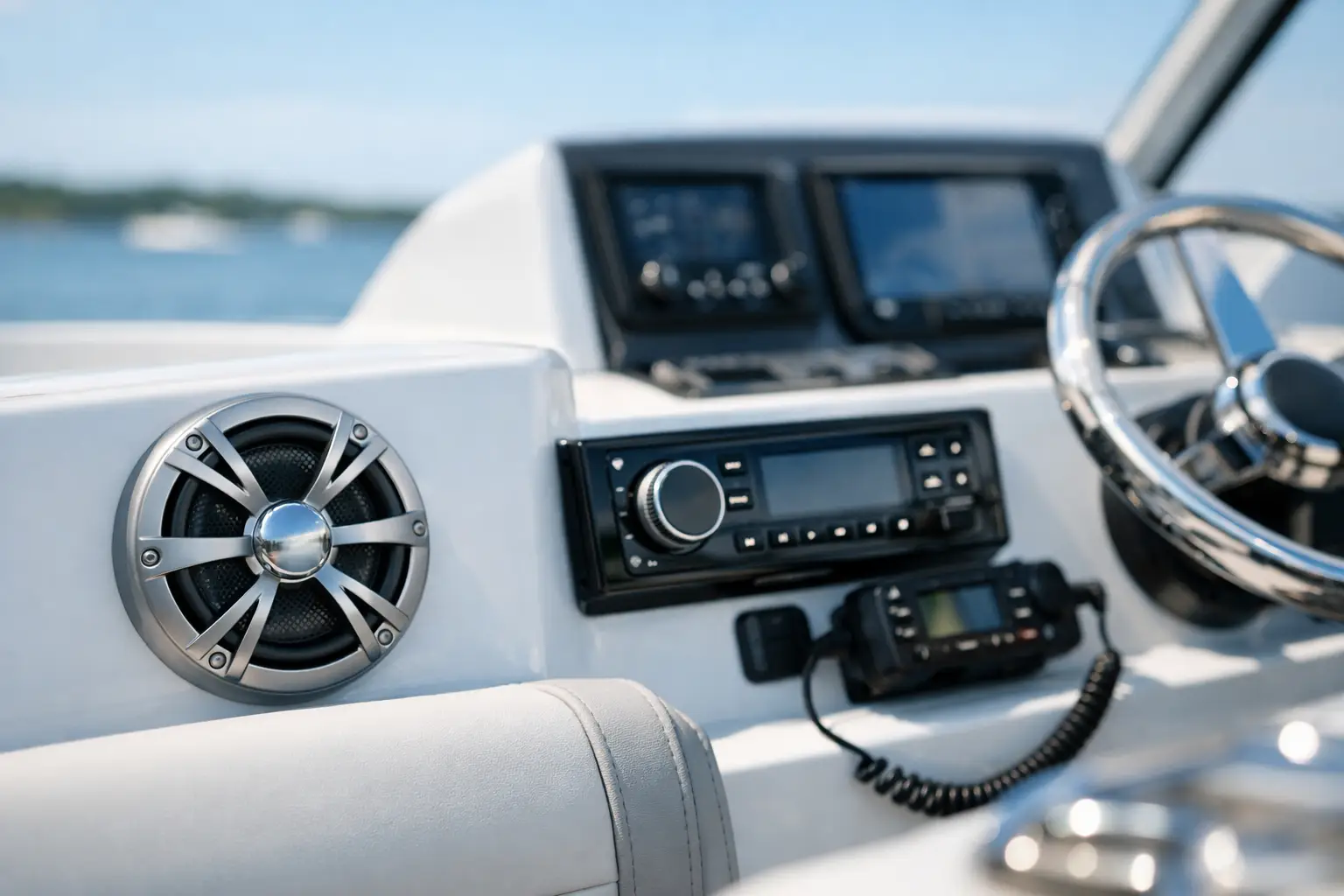
A boat stereo that sounds fine at the dock can fall apart the second you open the throttle. Wind noise climbs, engine vibration takes over, and suddenly the music is thin, harsh, or barely there. That is why marine audio system upgrades are not just about getting louder. The real goal is clean sound, reliable performance, and equipment built to survive sun, salt, spray, and long days on the water.
For South Florida boat owners especially, the environment is unforgiving. Heat, humidity, UV exposure, and corrosion can shorten the life of cheap gear fast. A proper upgrade means choosing the right marine-rated components, matching them correctly, and installing them with the same attention you would expect in any serious custom build. Done right, your system sounds better, lasts longer, and feels like it belongs on the boat instead of looking like an afterthought.
What marine audio system upgrades should actually fix?
A lot of factory boat audio setups have the same weak points. The head unit may be basic. The speakers might be underpowered or mounted in poor locations. Wiring is often limited, and there is usually no real amplification to keep the sound strong once you are moving.
The biggest complaint is volume without clarity. People turn the system up to compete with open-air noise, but all they get is distortion. That usually points to an imbalance in the system, not just a speaker problem. Better speakers help, but if the source signal is weak and the power is inadequate, premium speakers alone will not save the setup.
The second issue is durability. Marine gear takes abuse that automotive equipment was never designed to handle. A regular car speaker or amp might seem like a bargain, but on a boat it can become an expensive mistake. Materials matter here – sealed connections, UV-resistant cones, corrosion-resistant hardware, and proper mounting all make a difference over time.
Start with the listening goals, not the parts list
The best upgrades start with a simple question: how do you use the boat?
A sandbar boat, a center console for offshore runs, and a wake boat all need different audio strategies. If you mainly cruise with friends at moderate volume, you may want warm full-range sound and easy Bluetooth control. If you tow watersports, tower speakers and stronger amplification make more sense. If you spend full days out in the sun, battery management becomes a bigger part of the conversation.
This is where a custom approach wins. There is no single package that fits every boat. A setup that is perfect for one hull layout may sound uneven or underpowered in another. Speaker count, mounting depth, available storage, helm layout, charging system, and exposure to the elements all affect what makes sense.
The core pieces of a better marine audio system
Speakers matter, but placement matters too
Most boat owners notice the biggest immediate improvement when they replace factory speakers with quality marine-grade coaxials. Better materials and stronger motor structures usually mean cleaner highs, fuller mids, and better output at speed.
But placement can make or break the result. On a boat, listeners are spread out, surfaces reflect sound differently, and open air eats low-frequency energy. That means speaker angle, panel strength, and location all matter more than many people expect. Even the best speakers can sound average if they are buried in flimsy panels or firing into dead space.
Amplifiers bring control, not just volume
One of the most misunderstood parts of marine audio system upgrades is the amplifier. People hear amp and think aggressive volume. In reality, a good marine amp gives speakers the clean power they need to perform properly. The system sounds more controlled, more dynamic, and less strained.
That matters on the water, where background noise constantly changes. Without proper power, a stereo may sound acceptable at low levels but become brittle and distorted once you push it. With amplification, the system holds together better and gives you usable volume instead of messy volume.
Subwoofers fill in what open air takes away
Bass is the first thing you lose in an open marine environment. Even good full-range speakers can sound thin without low-frequency support. A properly chosen marine subwoofer adds depth and impact, which makes the whole system sound bigger and more balanced.
This does not always mean going overboard. Some boats benefit from one compact sub in the right enclosure. Others have the room and power system to support a more aggressive setup. It depends on how much output you want and how much space you are willing to dedicate.
Source units and controls should match real boat use
A modern marine receiver or media unit should be easy to use in bright sunlight, simple to control with wet hands, and stable enough to handle vibration. Bluetooth is expected now, but multi-zone control, phone integration, and remote control options can make a big difference in daily use.
On larger boats, zone control is especially useful. The people relaxing at the stern may want different volume than the passengers near the helm. That kind of flexibility makes the system feel intentional instead of one-size-fits-all.
Why installation quality matters as much as the gear
This is the part too many people find out the hard way. You can buy strong components and still end up with a weak system if the install is rushed.
Marine wiring has to be protected from moisture, corrosion, vibration, and movement. Connections should be sealed properly. Power and ground need to be sized correctly. Components need secure mounting and thoughtful ventilation. If the boat has multiple batteries or an upgraded charging setup, the audio system should be designed around that from the start.
Clean installation also affects serviceability. Boats live hard lives. If something ever needs attention, organized wiring and smart component placement save time, frustration, and money. At a shop that understands custom electronics, the goal is not just making it play today. The goal is making it hold up through real use.
Marine audio system upgrades and power management
A stronger stereo draws more current. That sounds obvious, but it is one of the most overlooked parts of planning a boat audio build.
If you add amps, subs, or tower speakers without thinking about the electrical side, battery drain becomes a problem fast. For some boats, the existing setup is enough. For others, it makes sense to add battery isolation, upgrade charging support, or build around a dual-battery arrangement. That depends on how long you anchor out, whether the engine runs often, and how hard you expect the system to play.
There is always a balance. More output is fun, but reliability on the water matters more. A smart build gives you the performance you want without putting your starting power at risk.
What to upgrade first if your budget has limits
Not every boat needs a full custom audio overhaul in one shot. If you want the best return on your first investment, start with the weakest link.
For many factory systems, that means speakers and amplification. That combination usually delivers the most noticeable improvement in clarity and usable volume. If your source unit is outdated or unreliable, replacing that may be the smarter first move. If the system already sounds decent but lacks depth, adding a subwoofer can transform it.
The right order depends on what bothers you most now. If the issue is muddy sound, focus on speaker quality and power. If the issue is missing features, start at the source. If the issue is system endurance, look at marine-rated materials and installation quality before anything else.
Customization is where the system starts to feel premium
This is where a basic stereo upgrade becomes part of the boat itself. Lighting accents, hidden amp racks, color-matched speaker grills, remote controllers, and clean panel integration all shape the final result.
A well-designed marine system should look as sharp as it sounds. It should feel intentional at the helm, at the transom, and in every seating area. The cleanest builds are the ones where the technology disappears into the boat until you turn it on.
That is the difference between adding equipment and building an experience. Shops that work across audio, lighting, electronics, and custom fabrication can tie those details together in a way that feels finished. For owners who care about both performance and appearance, that matters.
Choosing a shop for marine audio system upgrades
Marine work is not the place for guesswork. You want a shop that understands not just audio brands, but also electrical load, marine-safe installation practices, and real-world customization. Ask how they handle wiring protection, amp placement, battery planning, and exposure to sun and moisture. Ask whether the system is being designed for your specific boat use or just sold as a package.
A strong installer will talk through trade-offs honestly. Bigger is not always better. More speakers are not always the answer. The right build is the one that fits the boat, the owner, and the way the boat is actually used.
If your current setup disappears at cruising speed, struggles in rough conditions, or looks like it was pieced together over time, it may be time to upgrade it properly. A custom marine audio build should give you stronger sound, better durability, and a cleaner finish every time you leave the dock. If you are ready to make the boat sound as good as it looks, getting a professional quote is the smartest first move.