
Best Boat Dash Displays for a Custom Helm
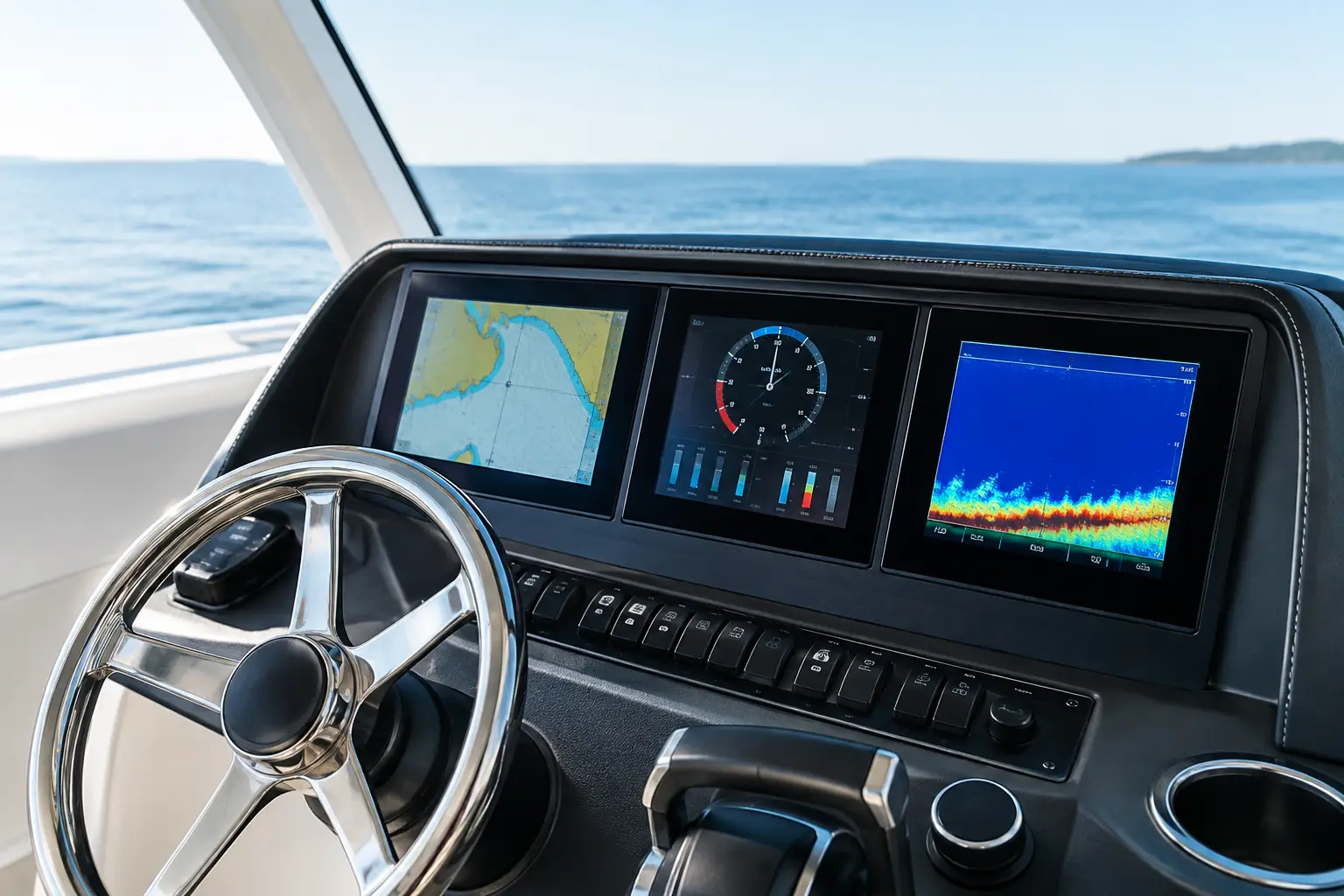
A faded gauge cluster, a sun-washed chart screen, and a tangle of add-on switches can make an otherwise sharp boat feel dated fast. The best boat dash displays do more than put maps on a screen. They turn the helm into a clean, confident command center built for the way you actually run your boat – from offshore runs to sandbar weekends and sunset cruises.
For South Florida boat owners, screen visibility, saltwater durability, and a properly planned installation matter just as much as the display itself. A premium unit installed at the wrong angle or paired with a cluttered dash will not deliver the upgrade you had in mind. The right solution blends navigation, engine information, audio control, lighting, and styling into one helm that looks finished and performs when conditions get rough.
What Makes a Boat Dash Display Worth Upgrading?
A modern marine display replaces guesswork with useful information. Depending on the system, you can view charts, radar, sonar, engine diagnostics, fuel economy, depth, water temperature, camera feeds, and more from a single location. That makes the helm cleaner, but it also makes your boat easier to operate.
The real benefit is integration. Instead of mounting a separate GPS, stereo remote, gauge panel, switch bank, and backup camera monitor, a well-designed dash can organize those controls around one or two multi-function displays. You keep important data where you can see it without taking your attention off the water.
That does not mean every boat needs the biggest screen available. A center console used for coastal cruising has different demands than a tournament fishing boat, wake boat, cabin cruiser, or high-performance center console. The best choice depends on how you use the vessel, what electronics are already aboard, and how much room the dash gives you to work with.
Best Boat Dash Displays by Boating Style
Large multi-function displays for offshore and serious navigation
For offshore boaters, a 12-inch or larger multi-function display is often the right starting point. These units give charts, radar overlays, sonar returns, and engine information enough room to be read at a glance. Split-screen operation is especially valuable when you need navigation on one side and bottom detail, radar, or engine data on the other.
Garmin, Simrad, Raymarine, and Lowrance all offer capable large-screen marine display families. The best fit comes down to your preferred charting, existing transducers, engine network, radar compatibility, and user interface preferences. A screen that looks impressive in a showroom is not automatically the one that feels most natural at speed in direct sunlight.
For many offshore helms, dual displays make more sense than one oversized screen. One screen can stay dedicated to navigation while the other handles sonar, radar, cameras, or vessel information. This setup costs more and requires more dash planning, but it gives the captain usable information without constantly switching pages.
Mid-size displays for center consoles and family boats
A 9-inch display is a strong all-around option for many center consoles, bay boats, pontoons, and family cruisers. It provides meaningful mapping and sonar detail without taking over a compact dash. For a boat that spends most of its time inshore, nearshore, or on familiar waterways, this size can deliver a major upgrade without overbuilding the helm.
Mid-size displays also work well when the dash needs room for physical switches, analog gauges, a stereo head unit, or a VHF radio. The goal is not to force every function onto the screen. The goal is to give the captain a layout that stays clear when hands are wet, conditions are bright, and passengers are waiting for the next move.
Digital gauge displays for a cleaner custom look
If your boat has aging individual gauges but does not need a full navigation system upgrade, a dedicated digital gauge display can make a huge visual difference. These displays pull compatible engine data into configurable pages, showing RPM, speed, trim, fuel flow, voltage, temperature, and warnings in a clean format.
This route is especially popular for custom builds where the owner wants a modern dash without losing the classic feel of the boat. It can also reduce the number of holes, bezels, and mismatched gauges across the panel. Compatibility is critical here. Your engine, sensors, and marine network must support the data you want to display.
Compact displays for secondary stations and tight dashboards
Smaller 5-inch to 7-inch units are not the main event on a large offshore boat, but they are excellent for compact consoles, secondary stations, and boats with limited helm space. They can serve as a dedicated engine monitor, chartplotter, sonar display, or camera screen.
A compact display is also a smart addition when you want redundancy. If a primary system goes down, a secondary screen with basic navigation capability can be more valuable than an extra inch or two on the main display.
Screen Brightness Matters More Than Marketing Specs
South Florida sun is unforgiving. A display that seems bright indoors can become difficult to read when mounted flat under an open center console. Look for marine-rated screens designed for daylight viewing, then consider the installation angle and available shade before deciding on size.
Glare is usually an installation issue as much as a display issue. A screen positioned toward the sky, surrounded by glossy black panels, can reflect light directly into the captain’s line of sight. A custom dash panel, matte finishes, a visor, or a slightly revised mounting angle can make a noticeable difference on the water.
Touchscreen control is convenient, but physical buttons still have a place. In rough water, a knob or button can be easier to operate than trying to hit a small icon on a bouncing screen. Many boaters prefer a display that combines touchscreen controls with buttons, especially for zooming charts or changing pages while underway.
Build the Dash Around the Whole System
The best boat dash displays are part of a complete helm plan, not a standalone purchase. Before choosing a unit, think through everything you want the dash to control. That may include VHF communication, audio zones, LED lighting, underwater lights, trim tabs, jack plates, cameras, radar, autopilot, and engine data.
A clean custom installation begins with measuring the available dash space and checking what sits behind the panel. Depth matters. Some displays need more rear clearance than owners expect, and wiring needs room to bend safely without strain. On older boats, the dash may also need reinforcement before larger displays are mounted.
This is where a custom panel can transform the result. Rather than cutting random openings into an aging dash, a new marine-grade panel can be designed around the chosen screens, switches, USB charging ports, audio controls, and branding details. The result looks intentional from every seat in the boat.
Don’t Ignore Wiring, Networking, and Saltwater Protection
A great screen cannot overcome poor wiring. Marine electronics should use proper tinned marine-grade wire, clean terminations, correctly sized fuses, protected connections, and organized routing. Salt, vibration, moisture, and heat punish shortcuts quickly.
Networking is equally important. If you want your displays to share information with engines, transducers, radar, satellite weather, stereo equipment, or cameras, those components need to be selected as a system. Mixing products can work in some cases, but assuming every device will communicate perfectly is how projects become expensive troubleshooting sessions.
For boats stored outdoors or used heavily in saltwater, pay attention to the condition of connectors, dash seals, and panel edges. Water intrusion behind the helm can damage far more than the display. A professional installation protects the investment where you cannot see it.
Choosing the Right Upgrade for Your Budget
A single mid-size display with quality mapping and engine data can be a meaningful upgrade for a practical budget. Larger dual-screen systems, radar, sonar modules, custom panels, cameras, and integrated marine audio move the project into premium territory, but they also create a helm that feels completely new.
Spend first on the features you will use every trip. If you fish offshore, prioritize navigation, sonar, radar readiness, and screen size. If your boat is built around entertaining, a clean dash, marine audio control, phone charging, lighting, and camera visibility may matter more than advanced fish-finding features. There is no reason to pay for capability that never gets switched on.
A professional consultation can also reveal opportunities to reuse compatible equipment while replacing what is holding the system back. Tint Station can help boat owners plan custom marine electronics and audio upgrades that fit the vessel, the lifestyle, and the look they want at the helm.
Your boat should not feel like a collection of unrelated accessories every time you take the wheel. Choose a display system that stays visible in the sun, delivers the information you need, and gives the dash the finished custom presence your boat deserves.