
Halogen vs LED Headlights – Which Is Better?
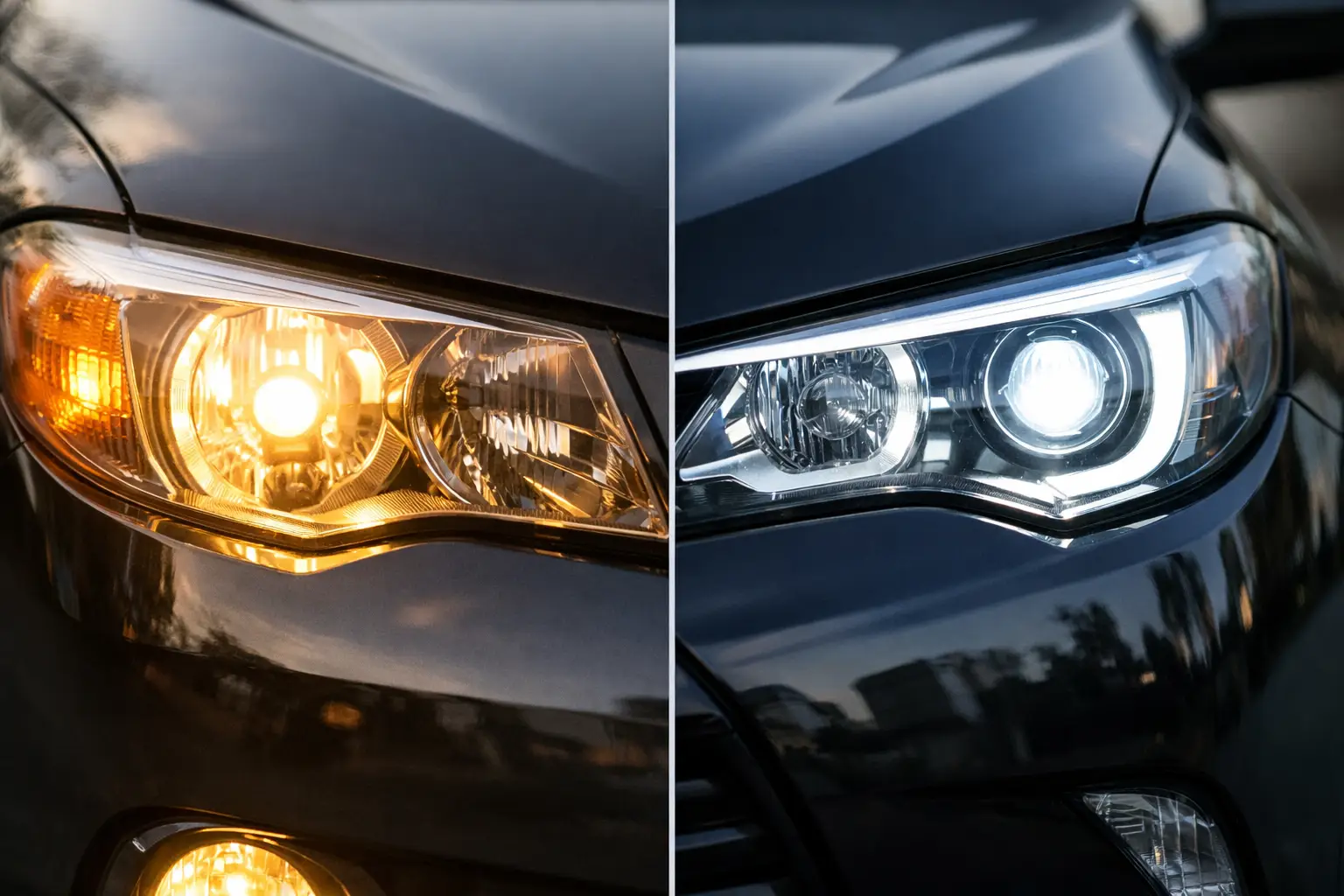
A headlight upgrade can make a clean build look finished – but it also has to earn its place after dark. The halogen vs led headlights decision is not just about choosing the brightest box on the shelf. Your vehicle’s housing design, wiring, night-driving habits, local road conditions, and the beam pattern you put in front of other drivers all matter.
For South Florida drivers, stronger lighting can be a real confidence upgrade during hard rain, on dim neighborhood roads, and through late-night highway traffic. The right setup delivers a crisp, controlled view ahead without turning your headlights into a glare machine. Here’s how halogen and LED systems really compare.
Halogen vs LED Headlights: The Real Differences
Halogen headlights are the familiar factory-style option found in countless cars, trucks, SUVs, motorcycles, and powersports vehicles. A halogen bulb creates light by heating a tungsten filament inside a sealed capsule containing halogen gas. It is simple technology, inexpensive to replace, and designed around the reflector or projector housing already on your vehicle.
LED headlights create light through semiconductors rather than a glowing filament. They use less power, run in a cooler-looking color range, and can last dramatically longer than halogen bulbs. Because the LED emitters need to be managed properly, many replacement bulbs also use a heat sink, fan, or driver module.
That basic difference affects almost everything: light output, color, longevity, installation complexity, and the final look of your front end. LED is usually the premium move, but premium only works when the product and installation match the vehicle.
Brightness is not the same as usable light
LED headlights can produce more light than halogen bulbs, often with a whiter color temperature that makes lane markings, signs, and road edges appear sharper. A quality LED system can feel like a major upgrade over worn-out factory halogens, especially if you spend time driving after sunset.
But advertised lumens do not tell the full story. What matters on the road is the beam pattern: where the light lands, how evenly it is distributed, and whether the cutoff stays controlled. A cheap LED bulb shoved into a reflector housing may look incredibly bright when you stare at it. It may also scatter light above the cutoff, create dark spots farther down the road, and glare oncoming traffic.
Halogen bulbs generally maintain the beam pattern the housing was engineered to create. That is their biggest advantage. If your factory headlights are in good condition and you simply need dependable replacement bulbs, high-quality halogens can still deliver a clean, predictable beam.
Why LED Headlights Are the Popular Upgrade
The visual impact is immediate. LEDs produce a bright white light that updates the look of an older vehicle and pairs naturally with LED fog lights, accent lighting, grille lighting, or a custom audio and electronics build. For drivers who care about a sharper, more modern front-end appearance, halogen’s warm yellow tone can feel dated.
LEDs also use less electrical power than comparable halogens. That can be useful on vehicles with added accessories, including amplifiers, lighting, cameras, security systems, and charging equipment. The power savings are not a reason to ignore proper wiring, but they are a real benefit in a well-planned custom setup.
Longevity is another strong point. A typical halogen bulb may last hundreds of hours to around a thousand hours, depending on the bulb and driving conditions. Quality LEDs can last several thousand hours or more. Real-world life varies with heat management, moisture exposure, vibration, and product quality, yet a properly installed LED kit generally needs less frequent replacement.
That said, not every LED upgrade is built the same. The compact bulbs with no meaningful thermal control may fade, flicker, or fail early in Florida heat. Premium LED lighting costs more up front because the components, drivers, thermal design, and optical performance are better. That difference shows up long after the install.
Where Halogen Still Makes Sense
Halogen is not obsolete. It remains the smart choice for drivers who prioritize low replacement cost, factory-correct operation, and straightforward serviceability. If a vehicle uses a reflector housing that does not perform well with LED replacement bulbs, staying with a high-performance halogen can be safer and more effective than forcing an LED conversion.
Halogen bulbs also create plenty of heat at the filament, which helps shed light snow and ice in colder climates. That matters more around Detroit than Deerfield Beach, but it is worth understanding for drivers who travel north or maintain vehicles in both regions. LEDs produce less forward heat, so their lenses may not clear winter buildup as quickly.
There is also the question of color preference. Halogens are warmer, usually around 3,000K to 3,500K, and some drivers find that warmer light more comfortable in rain or fog. LED options commonly sit around 5,000K to 6,500K. Around 5,000K delivers a clean white output; ultra-blue options may look aggressive, but they are not always the best choice for visibility in wet weather.
Fitment, Heat, and Electrical Compatibility
Headlight installation is where a lighting upgrade becomes either a clean win or a recurring headache. LED bulbs may physically fit the factory socket but still interfere with a dust cap, require additional room behind the housing, or need a properly secured driver module. If the bulb has a cooling fan or heat sink, it needs airflow and space to do its job.
Modern vehicles can add another complication: the factory computer may monitor bulb resistance. Since LEDs draw less power, some cars interpret them as a burned-out bulb and trigger a warning light, rapid flashing, or intermittent operation. CAN bus-compatible bulbs, resistors, or dedicated modules can address that issue, but they need to be selected and installed correctly.
Avoid the temptation to add random resistors without a plan. They generate heat and need to be mounted away from plastic, wiring, and other sensitive components. A professional install checks more than whether the lights turn on. It verifies fitment, manages wiring, seals the housing, and aims the headlights correctly.
The housing determines the best path
Projector headlights generally give more control over the beam and are often better candidates for a quality LED upgrade. Reflector headlights can work well with LEDs too, but bulb geometry is critical. The LED emitters must sit in the correct position to mimic the original halogen filament. Otherwise, the beam can become scattered even if the bulb is technically compatible.
If your headlights are hazy, yellowed, cracked, or holding moisture, new bulbs alone will not solve the problem. Restoring or replacing the housing may deliver a bigger improvement than any bulb upgrade. Clear lenses, properly aimed lights, and a healthy electrical system create the foundation for every lighting choice.
Cost: Up-Front Price vs Long-Term Value
Halogen wins on initial cost. Replacement bulbs are widely available and affordable, making them practical for a daily driver, fleet vehicle, or anyone handling a quick repair on a budget. The trade-off is a shorter lifespan and a less dramatic visual and performance upgrade.
LED costs more initially, particularly when you choose a reputable kit designed for your specific vehicle. However, the longer service life, reduced power draw, modern color, and potential for better nighttime visibility can make it the better value over time. The key word is potential. A low-quality LED kit that causes glare, warning lights, or early failure is not a value upgrade.
For many vehicle owners, the sweet spot is a quality white LED system matched to the proper housing, paired with professional aiming. It gives the vehicle a more premium look while keeping road performance and safety in focus.
Choose the Upgrade That Fits Your Build
Choose halogen if you want the lowest-cost replacement, need the most factory-like beam behavior, or have a housing that is not LED-friendly. Choose LED if you want a modern appearance, longer bulb life, lower power draw, and better nighttime performance – provided the bulbs are designed for your vehicle and installed with the beam pattern in mind.
Before ordering anything, check the bulb size, housing style, available clearance, and whether your vehicle uses a bulb-monitoring system. Also consider how you drive. A show-focused weekend build, a work truck that sees dark roads, and a family SUV running daily errands may all need different lighting solutions.
A properly selected headlight upgrade should make your vehicle look more dialed in and make every night drive easier on the eyes. If you want a setup that matches your build instead of fighting your factory housings, Tint Station can help you choose and install lighting that looks sharp, performs cleanly, and stays reliable mile after mile.