
Best Commercial Tint Options for Florida Offices
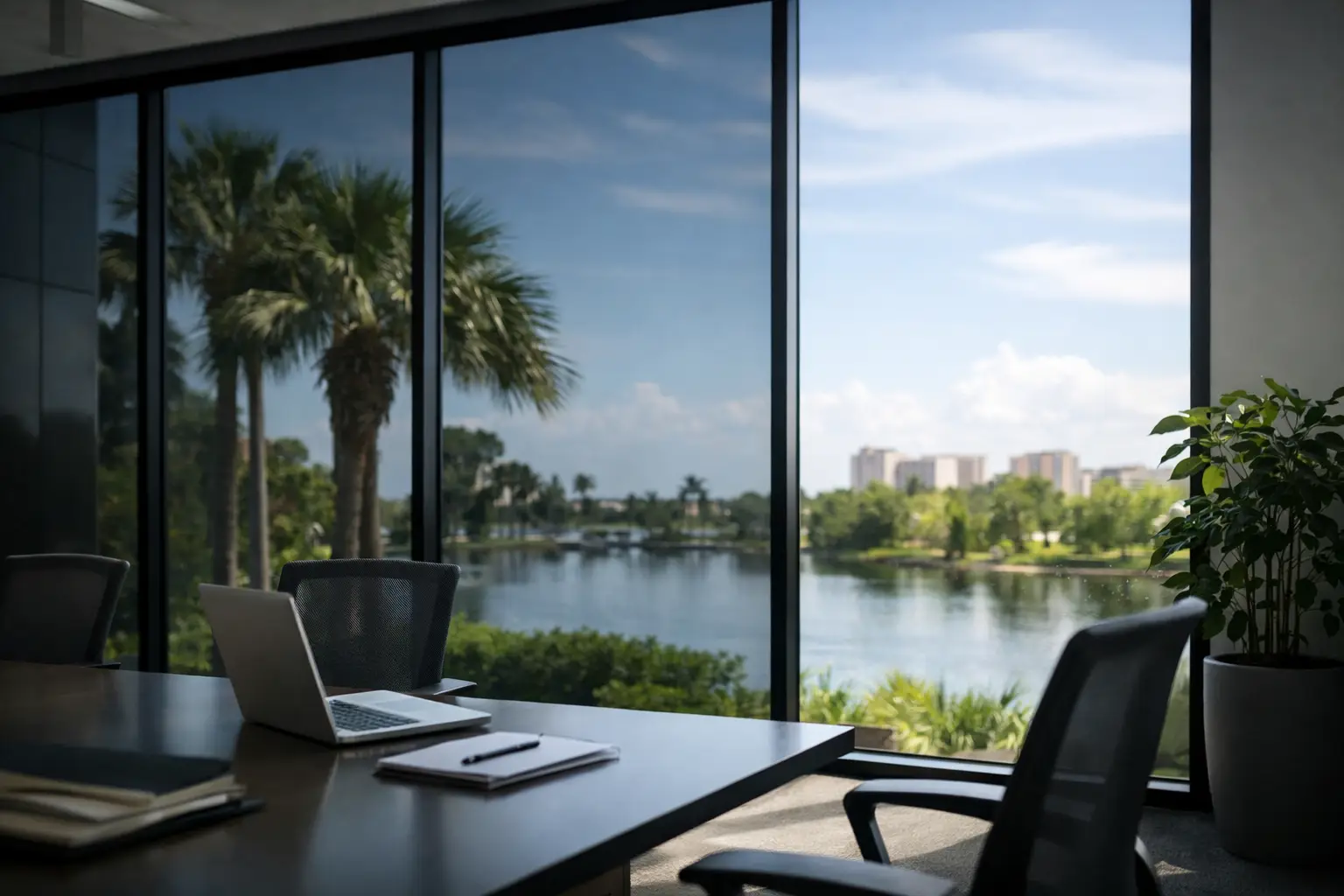
That afternoon sun hitting the front glass can turn a polished office, retail space, or lobby into the hottest seat in the building. The best commercial tint options solve more than glare. They can reduce heat, protect interiors, add privacy, reinforce vulnerable glass, and give your business a sharper finished look without blocking the daylight your space needs.
For South Florida businesses, commercial window film is not a one-size-fits-all upgrade. A street-facing showroom has different priorities than a medical office, restaurant, warehouse, or executive suite. The right film depends on your glass, sun exposure, operating hours, building rules, and how you want customers to experience the space.
Start With the Problem Your Glass Needs to Solve
Commercial tint works best when it is chosen around a clear goal. If your team closes blinds every afternoon because the west-facing windows throw glare across monitors, a high-performing solar control film should be at the top of the list. If people outside can see directly into an office, conference room, or treatment area, privacy film may be the better move.
Some businesses need both. A bright storefront may need heat rejection during the day while still keeping merchandise visible from the sidewalk. A professional office may need subtle privacy in selected interior rooms without making the building feel closed off. The best results come from treating each elevation and room on its own terms rather than applying the same film across every pane.
Best Commercial Tint Options by Business Goal
Solar control film for heat and glare
Solar control film is the go-to option for sun-heavy glass. It rejects a portion of solar energy before it has a chance to heat the room, helping reduce hot spots near windows and making the space more comfortable for customers and staff. It also cuts glare, which matters in offices with screens, reception desks, televisions, and display lighting.
The film can be nearly clear, lightly tinted, or more reflective depending on the look and performance level you need. A lighter ceramic or spectrally selective film is often the smart call when you want heat reduction and UV protection without darkening an open, upscale space. A darker or more reflective film can provide stronger daytime privacy and a bolder exterior appearance, but it may change the building’s look more noticeably.
In Deerfield Beach and throughout South Florida, solar control film is often the strongest all-around investment for offices, retail storefronts, restaurants, and gyms with direct exposure. It helps protect flooring, furniture, wall finishes, and merchandise from fading while making the glass more useful during the hours when the sun is working hardest.
Decorative and frosted privacy film
Privacy should not mean covering every window with blinds. Decorative film gives businesses a cleaner way to separate spaces, obscure sensitive areas, and add branded style to plain glass. Frosted, etched, gradient, patterned, and custom-cut films are popular for conference rooms, medical offices, salons, financial offices, and interior glass partitions.
A full frosted film blocks visibility while still allowing light to pass through. Gradient film offers a more open feel by obscuring only part of the glass. Custom designs can incorporate stripes, logos, room names, or visual elements that make a space feel intentional instead of temporary.
This option is about appearance as much as discretion. If your space has great natural light but lacks separation, decorative film can create privacy without turning the room into a dark box. For customer-facing businesses, it is also an easy way to make entrances and interior glass look more premium without a major renovation.
Security film for vulnerable glass
Security film is built for a different job. It holds broken glass together when an impact occurs, helping reduce dangerous shards and making forced entry through a window more difficult. It does not make glass indestructible, and it should never be marketed as a substitute for an alarm, quality locks, or smart security planning. What it can do is add valuable delay and containment when seconds matter.
This makes security film a strong fit for storefronts, jewelry displays, pharmacies, offices with ground-floor windows, and businesses that want an added layer of protection for glass doors. Clear security film preserves the existing appearance of the glass, while tinted or solar security combinations can provide heat control and reinforcement in one installation.
Thickness, anchoring method, and the type of glass all matter here. A professional assessment is worth it, especially for large panels, entry doors, or areas where safety requirements may apply. The right specification can perform very differently from a basic film applied without attention to the frame system.
Low-E film for year-round comfort
Low-emissivity, or Low-E, film is designed to help manage heat transfer through glass in more than one season. In warm climates, it can reduce solar heat gain. It can also help retain conditioned air, which is useful for spaces that run air conditioning hard for long hours.
This is worth considering for businesses with older glass that cannot justify a full window replacement. A quality Low-E film can improve comfort and efficiency while leaving the building’s existing windows in place. It is a practical middle ground when you want better performance without the cost, downtime, and construction mess of new glazing.
The trade-off is that premium films typically cost more upfront than basic tinted products. The payback depends on glass area, utility usage, exposure, and how aggressively your HVAC system is fighting the sun. For many South Florida commercial spaces, comfort and glare control alone make the upgrade worthwhile.
Do Not Choose Film by Shade Alone
A darker film is not automatically a better heat-control film. Modern ceramic and spectrally selective products can reject significant heat while maintaining a lighter appearance. That matters for businesses that want a clean, welcoming exterior, need visibility into a showroom, or have property rules that limit dark or mirrored glass.
At the same time, a darker film may be exactly right for a back office, storage area, or street-facing section where daytime privacy is the priority. The key is matching visible light transmission, reflectivity, and solar performance to the role of each window.
A professional installer should also check the glass itself before recommending a product. Certain film and glass combinations can create excess thermal stress, particularly on insulated units, older panes, or glass with existing damage. Installation quality and product compatibility are not details to skip when the project involves an entire business location.
Consider Your Building Rules and Nighttime Privacy
Before choosing a reflective or dark commercial film, check your lease, property manager requirements, and local rules. Many office parks, retail centers, and condominium-style commercial properties have standards for exterior appearance. A film that looks great on a standalone building may not be approved in a shared plaza.
Also, remember that standard tinted glass creates the most privacy when it is brighter outside than inside. At night, once your interior lights are on, people outside may be able to see in. If around-the-clock privacy is essential, decorative film, blinds, shades, or a strategic combination may be a better solution.
Build a Commercial Tint Plan That Looks Intentional
The strongest projects do not always use one film everywhere. You might use solar control film along the sun-facing storefront, frosted film on conference room glass, and security film on entry doors or exposed side windows. That approach gives each part of the property the performance it needs while keeping the finished look consistent.
Tint Station helps businesses build those custom solutions with professional installation and a clear focus on the details that matter: comfort for employees, a better customer experience, protected interiors, and glass that fits the image of the business. Whether you are updating one office suite or planning a larger commercial property upgrade, a site evaluation can reveal where film will make the biggest impact.
Your windows should do more than frame the view. Choose commercial tint that makes your space cooler, more private, safer, and ready to work as hard as the rest of your business.
Related window tinting services from Tint Station